
There are weeks in running where nothing in your training plan has really changed, but the effort suddenly feels different anyway.
The same easy run feels slightly heavier. Recovery takes longer than expected. Pace that normally feels comfortable suddenly requires more concentration. Even though the schedule looks familiar, the body responds as if the workload quietly became harder.
This experience confuses many runners because it seems irrational at first.
If the training is the same, the body should respond the same way.
But running does not work like a machine.
Your body is constantly balancing training stress against recovery capacity, and recovery capacity changes far more often than most runners realize. Sleep, mental stress, accumulated fatigue, nutrition, weather, life routines, and previous training load all influence how manageable a week feels internally.
This is why identical training weeks can create completely different experiences.
The body is never responding only to the workout itself.
It is responding to the total load surrounding the workout at that moment.
If you want to track how your body responds to hard efforts more precisely, using a reliable device can help you see patterns in heart rate and recovery over time.
A guide like Best Heart Rate Monitors for Running can help you choose one that supports consistent tracking.
Recovery Capacity Changes Constantly
One reason runners become frustrated during harder-feeling weeks is that they assume fitness should create consistency in how training feels.
But even very fit runners experience fluctuations in recovery capacity.
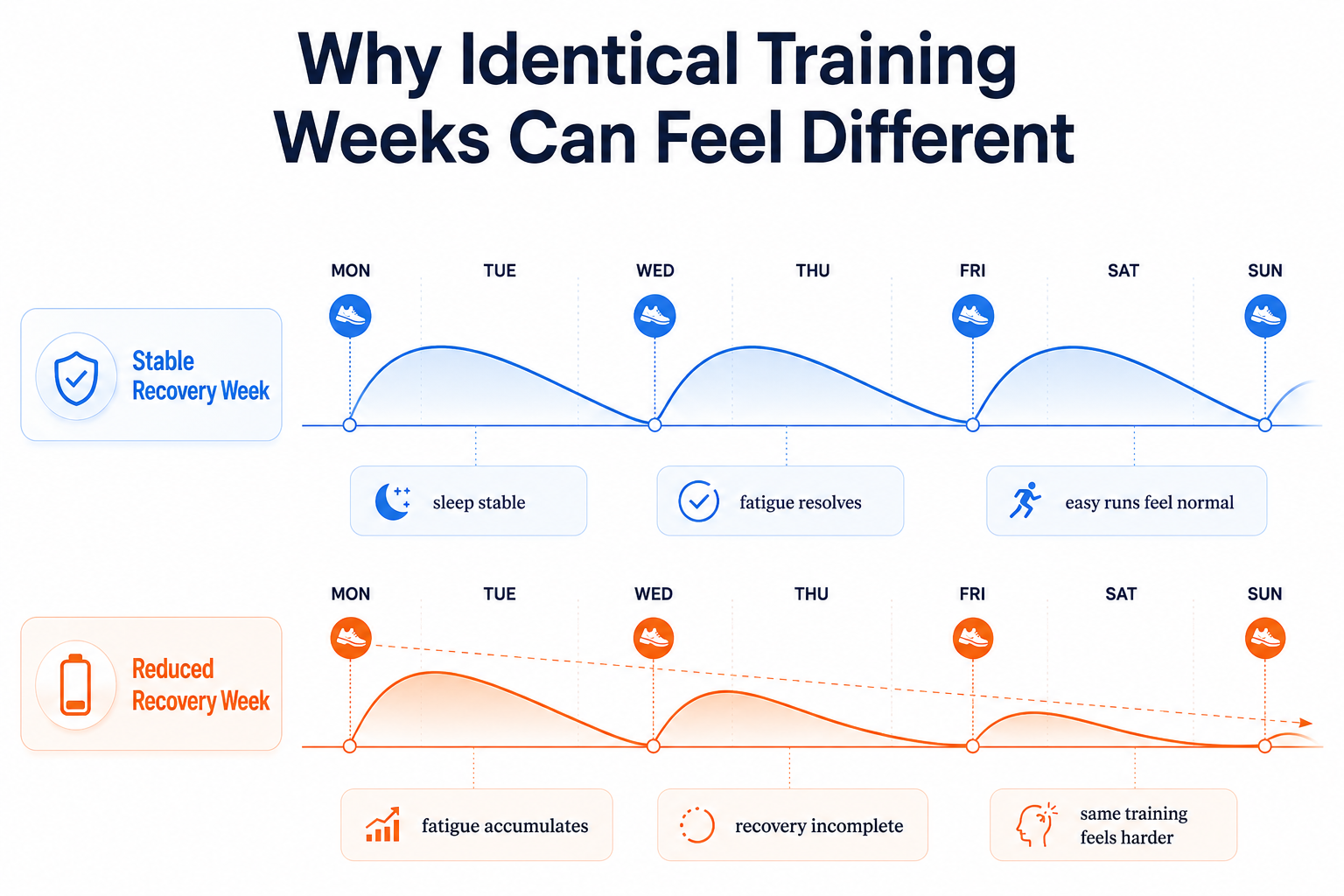
Some weeks the body absorbs stress efficiently. Other weeks recovery quietly becomes less effective even if nothing dramatic appears obviously wrong. The difference may come from slightly worse sleep, more life stress, lingering fatigue from previous weeks, or simply the natural variability of biological systems.
The important thing is that the body does not separate those factors neatly.
Everything accumulates together.
This is also why runners sometimes struggle to understand how to tell if your training load is too high, because excessive load often develops through smaller recovery disruptions accumulating gradually rather than one major breakdown happening all at once.
When recovery capacity temporarily drops, the exact same training suddenly feels more demanding even though the workouts themselves did not change.
Fatigue Is Not Always Immediate
One difficult aspect of running fatigue is that it often appears with delay.
A harder week does not always feel difficult while it is happening. Sometimes the accumulated stress only becomes noticeable several days later, once the body has already absorbed multiple sessions without fully recovering between them.
This is why runners occasionally feel confused after a week that looked perfectly manageable on paper.
The training itself may not have been excessive. The problem is that fatigue from previous days never fully disappeared before new stress continued arriving.
Over time, this changes how normal effort feels.
Easy runs stop feeling naturally smooth. Legs feel slightly flatter more often. Recovery becomes less predictable from day to day. The body still functions, but the feeling of resilience quietly decreases.
This is closely connected to what lingering fatigue actually means in running, because accumulated fatigue often changes the feeling of training long before performance collapses dramatically
Why Reacting Emotionally Usually Makes Things Worse
When a week suddenly feels harder than expected, many runners immediately assume they are losing fitness. That reaction often creates unnecessary panic.
They begin forcing pace, adding intensity, or trying to “prove” that their fitness is still there. But when recovery capacity is already slightly reduced, additional stress usually creates more instability instead of solving the problem.
This is one reason experienced runners often react more calmly to difficult weeks.
They understand that temporary fluctuations are normal. Not every uncomfortable week represents a problem that needs immediate correction.
Sometimes the body simply needs a short period of reduced strain before normal responsiveness returns naturally.
This is also why understanding when progress slows down and what to do about it becomes important, because periods where running feels flatter are often temporary adaptation phases rather than signs that training has stopped working.
The same training can feel completely different depending on how much recovery capacity your body has available that week.
Consistency Matters More Than Individual Weeks
One harder-feeling week rarely means very much by itself. What matters more is the longer pattern surrounding it.
If most weeks still feel manageable and recovery eventually stabilizes again, occasional difficult weeks are usually just part of normal training variability. The body does not move through adaptation in a perfectly smooth line.
Some weeks feel lighter. Others feel heavier. That fluctuation is normal. The mistake is assuming every difficult week requires dramatic interpretation.
Long-term progress usually comes from staying consistent through those smaller fluctuations rather than constantly reacting emotionally to them.
This is one reason sustainable runners often appear patient from the outside. They understand that temporary instability does not automatically mean something is wrong.
Very often, the body simply needs enough consistency and recovery for balance to return naturally again.
A shoe that reduces impact stress during higher-volume periods can also help harder weeks feel more manageable mechanically.
Best Running Shoes for Long Runs explains which models tend to reduce accumulated fatigue best during demanding endurance blocks.
Conclusion
Some weeks feel harder even when training stays the same because recovery capacity is constantly changing underneath the surface.
The body is always responding not only to the workout itself, but also to sleep, stress, accumulated fatigue, life demands, and how much unresolved load already exists in the system.
This means identical training does not always produce identical feelings.
The important skill is not avoiding every difficult week.
It is learning how to recognize when a harder-feeling week is simply temporary fatigue variability — and when it reflects a deeper recovery imbalance that needs attention.
Because long-term running progress is not built through perfect consistency in how every run feels.
It is built through staying steady enough for adaptation to continue across many different kinds of weeks.
Frequently Asked Questions
Is it normal for the same workout to feel harder some weeks?
Yes. Recovery capacity constantly changes based on sleep, stress, accumulated fatigue, and many other factors outside the training plan itself.
Does a harder week mean I am losing fitness?
Usually not. Temporary fluctuations in how training feels are extremely normal, even in well-structured training blocks.
Can fatigue appear several days later?
Yes. Accumulated fatigue often appears gradually after multiple sessions rather than immediately after one difficult workout.
Should I push harder if training suddenly feels difficult?
Usually not. Forcing additional intensity during reduced recovery periods often increases strain instead of improving adaptation.
How do I know if a difficult week is becoming a bigger problem?
If recovery continues becoming less stable over multiple weeks and easy effort repeatedly feels unusually difficult, the body may need reduced stress or more recovery support.