
Running slower sounds simple. Until you actually try it.
Your pace suddenly feels unusually slow. Other runners seem to pass you more easily. Your rhythm feels slightly off, and instead of relaxing into the run, you become more aware of how unnatural it feels.
It can even feel like you are doing something wrong.
But that reaction is part of the process.
Running slower is not just a pacing adjustment. It is a skill. And like most skills in running, it takes time before it starts to feel natural.
This is closely connected to how easy effort is supposed to feel in the first place. If that reference point is unclear, it helps to understand What Does an Easy Run Actually Feel Like, where the sensation of controlled, relaxed running is broken down in more detail.
In this article, you will learn why running slower often feels awkward at first, what is actually happening when you reduce your pace, and how that feeling gradually becomes more natural over time.
Modern running watches allow you to track pace, distance, heart rate, cadence, VO2 max and much more during workouts.
If you’re choosing one for training, see our guide to the Best Running Watches for Running (2026).
Running slower often feels unnatural at first.
The moment you intentionally reduce your pace, something shifts. Your stride feels different, your rhythm is slightly off, and the effort can feel almost too low, as if you are no longer really running.
That reaction is not a sign that something is wrong.
It is a sign that your body is adjusting.
Why this happens
Your body is used to a familiar pattern.
If you have been running slightly too fast, your stride, breathing, and overall sense of effort have adapted to that pace. It feels normal because you have repeated it often.
When you slow down, that pattern breaks.
The coordination between movement and effort no longer matches what your body expects. You are doing something correct, but it feels incorrect because it does not align with what feels familiar.
The mismatch
This is where the confusion comes from.
You are running at the right effort, but the sensation does not match your expectations. The run feels too easy, and that creates doubt.
This is also where many runners drift back into the same pattern without realizing it. They increase their pace slightly, just to restore that familiar feeling.
That is exactly the situation described in Am I Running Too Fast, where easy running quietly turns into moderate effort without an obvious shift.
The mental effect
Most of the challenge is not physical.
It is the instinct to correct something that does not need correction.
The thought appears quickly. This cannot be right. It feels too easy. And before you notice, you have already increased your pace again.
Learning to run slower is not just about adjusting speed.
It is about learning to trust a different kind of effort.
Running slower feels wrong at first — because your body is used to running too fast.
You are comparing yourself to the wrong reference
When you slow down, it is not just your pace that changes. Your perception changes with it.
You begin to notice different things. Other runners passing you, your pace looking slower on your watch, familiar routes feeling slightly unfamiliar. None of these are problems on their own, but together they create a sense that something is off.
That feeling usually comes from comparison.
Most runners do not judge their pace in isolation. They measure it against other runners, against their past performances, or against what they believe “normal” should look like. That comparison creates pressure, even when the run itself is correct.
The issue is that those references rarely reflect the full picture.
The runners around you may be doing a harder workout. Your previous pace may have been slightly too fast for the purpose of the run. And your expectations may not match what the session is actually meant to achieve.
But your brain still reacts as if something is wrong.
This is also closely connected to how effort should guide your running rather than pace alone, which is explained in What Does Easy Pace Actually Mean, where the focus shifts from external speed to internal control.
What actually matters is not how the run looks.
It is how it works.
Whether your effort is controlled, whether you can sustain it, and whether it matches the goal of the run. Those are the signals that define whether you are doing it right.
You’re not running too slow — you’re just comparing yourself to the wrong reference.
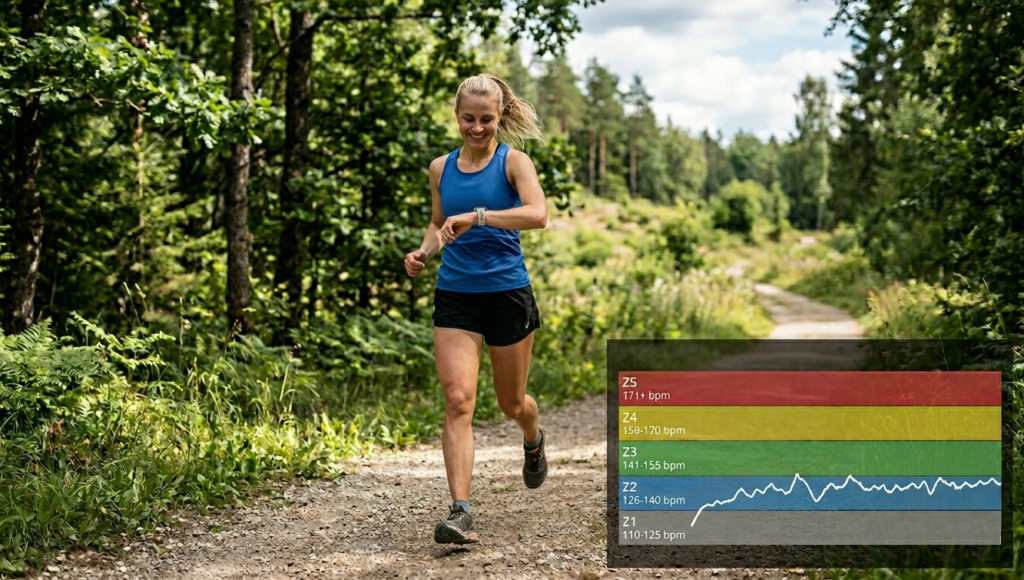
Slower running is what builds real progress.
It does not feel impressive. It does not look fast, and it does not give you the sensation of a hard workout. That is exactly why many runners underestimate it.
And that is also why it works.
What slow running actually does
When you run at a controlled, lower intensity, your body begins to adapt in ways that are not immediately visible. Your aerobic system develops, your body becomes more efficient at using energy, and your heart rate remains stable instead of drifting higher.
The effort stays manageable, which allows you to repeat that stress consistently.
That consistency is what builds the foundation.
Why faster is not better here
When easy running becomes slightly too fast, the entire system starts to shift.
Your heart rate rises more quickly, fatigue begins to accumulate, and recovery slows down. At first, it may still feel manageable, but over time it reduces your ability to train consistently.
This is the same pattern described in What Happens if You Run Too Fast Too Often, where small increases in intensity quietly change the effect of your training.
The hidden benefit
Running slower gives you something that faster running often takes away.
It allows you to run more often, extend your duration, and maintain control across the entire week. Instead of chasing intensity, you build volume that your body can actually absorb.
That is where most progress comes from.
The paradox
Running slower does not feel like progress.
But over time, it is what makes you faster.
If you want to understand how effort should align with your training, it helps to look at What Is a Good Heart Rate for Running, where the relationship between intensity and adaptation is explained more clearly.
Slow running doesn’t feel productive — but it’s what makes consistent progress possible.
Why it feels awkward, but is not wrong
When you slow down, it is not just your pace that changes.
Your movement changes with it.
What you start to feel
Your stride becomes slightly shorter, your rhythm feels less natural, and your timing can feel just out of sync. It can feel as if your body is not moving the way it should.
That sensation is not a problem.
It is an adjustment.
Why this happens
Your body adapts to the pace you use most often.
If you have been running slightly faster, your stride length, cadence, and coordination have all settled into that pattern. It feels natural because it has been repeated consistently.
When you slow down, that coordination no longer matches the new speed. The movement has to reorganize itself around a different effort.
This is also why effort matters more than pace when defining how a run should feel, which is explained in What Does Easy Pace Actually Mean, where the focus shifts from external speed to internal control.
The transition phase
For a period of time, the run may feel less smooth.
Your steps are not as automatic, your rhythm is slightly uneven, and the overall flow is not quite there yet. It can feel like a step backward, even though it is not.
This is simply the phase where your body is learning a new pattern.
What actually improves
As the adjustment happens, things begin to settle.
Your cadence stabilizes, your stride becomes more efficient at lower speeds, and the movement regains its smoothness. The difference is that it now matches a lower, more controlled intensity.
That is where easy running starts to feel natural.
What to do
The key is not to force your old rhythm.
Let a new one develop.
Keep your stride relaxed, avoid overthinking your form, and allow your body time to adapt.
It feels awkward because it’s new — not because it’s wrong.
How to actually slow down
Slowing down sounds simple.
In practice, it rarely is.
Most runners try to consciously reduce their pace, but after a few minutes they drift back to what feels familiar. Not because they are doing something wrong, but because their body returns to a pattern it already knows.
Start with your stride
The easiest way to slow down is not to force your pace.
It is to slightly reduce your stride.
When your steps become a bit shorter and lighter, your pace drops naturally without creating tension. There is no need to reach forward or control the speed directly. The adjustment happens through movement, not effort.
Relax your upper body
Tension often keeps your pace higher than it needs to be.
When your shoulders are tight or your arms are rigid, your rhythm stays elevated. Letting that tension go allows your movement to settle into a slower, more controlled pattern.
A relaxed upper body supports a relaxed pace.
Let your breathing guide you
Breathing is one of the simplest ways to understand whether your effort is right.
When the pace is truly easy, breathing feels calm and steady. You do not need to control it consciously, and it does not draw your attention.
If it becomes more noticeable, it is usually a sign that the effort has drifted slightly higher.
This is also how easy effort is defined in practice, which is explained in What Does an Easy Run Actually Feel Like, where breathing and control are used as the main reference points.
Accept the slower pace
This is often the hardest part.
Your watch will show lower numbers. The pace may feel slower than you expect. It can even feel like you are not doing enough.
That reaction is normal.
But this is exactly where the benefit comes from.
If you want to understand why slower running leads to better long-term results, it helps to look at How to Build an Endurance, where the role of controlled intensity becomes much clearer.
You don’t force a slower pace — you allow it by adjusting your movement and effort.
Ignore pace and focus on effort
One of the main reasons slowing down feels difficult is simple.
You are still focused on pace.
Your watch shows a number, and that number shapes how you judge the run. Even when the effort is correct, the pace can make it feel wrong.
The problem with pace
Pace is not a stable signal.
It changes with terrain, weather, fatigue, and recovery. The same effort can produce a different pace depending on the conditions, which makes it unreliable as a reference point on its own.
This is why relying on pace often leads to confusion, especially when your runs do not match your expectations. The relationship between external speed and internal load is explained more clearly in Heart Rate vs Pace, where that difference becomes easier to see.
What to focus on instead
A more reliable approach is to shift your attention.
Instead of asking what pace you are running, focus on how the effort feels.
At the right effort, your breathing remains calm, your movement feels relaxed, and the run is something you can sustain without needing to adjust constantly. These are the signals that matter.
This is also how easy running is defined in practice, which is explained in Easy Runs Explained, where the focus moves away from numbers and toward control.
Why this works
When you focus on effort, pace begins to adjust on its own.
Your runs become more consistent, your effort stays controlled, and the overall structure of your training becomes more stable.
You are no longer trying to force a number.
You are allowing the right intensity to guide the run.
Pace is just a number.
Effort is what defines your run.
The shift from ego to control
Slowing down is not only physical.
It is mental.
What makes it difficult
Running slower challenges something most runners do not immediately notice.
Their expectations.
There is a natural pull to maintain a certain pace, to match what you have done before, and to avoid the feeling of falling behind. Even when that pace is not aligned with the purpose of the run, it can still feel like the right thing to hold on to.
The turning point
At some point, the focus begins to change.
Instead of asking how fast you are going, you start asking whether you are in control.
That shift is small, but it changes how you approach every run.
What control looks like
Control does not feel impressive.
Your effort stays stable, your breathing remains manageable, and the run feels sustainable from start to finish. Nothing feels forced, and nothing drifts out of range.
It is quiet, but effective.
Why this matters
When your focus moves from pace to control, your training begins to stabilize.
Your effort becomes more consistent, recovery improves, and your progress becomes easier to sustain over time. Instead of reacting to numbers, you start responding to what your body actually needs.
This is also closely connected to why some runs feel harder than expected, even when nothing obvious has changed. That connection is explained in Running Feels Hard? Here’s Why, where effort and control are brought together in a clearer way.
Slowing down isn’t losing fitness — it’s gaining control.
What to expect in the beginning
When you start running slower, it will not feel natural right away.
That is completely normal.
What you will notice first
Your pace feels unusually slow, your rhythm is slightly off, and the run may feel less satisfying than what you are used to. Even when the effort is correct, the experience can feel unfamiliar.
That contrast is what makes the adjustment difficult at first.
The adjustment phase
For a period of time, doubt tends to appear.
You may question whether you are doing it right, feel the urge to speed up, or wonder if you are actually progressing. None of that means the approach is wrong. It simply reflects that your body and perception are adapting at the same time.
This is also why easy running often feels harder than expected in the early stages, which is explained in Why Easy Runs Feel Too Hard, where that mismatch between effort and expectation becomes clearer.
What changes over time
As the adaptation happens, things begin to settle.
Your movement becomes smoother again, your effort starts to feel more natural, and your confidence in the pace increases. The same intensity that once felt unfamiliar begins to feel controlled.
The long-term effect
What once felt slow and uncomfortable gradually becomes stable and sustainable.
That is the point where slower running stops feeling like a compromise and starts feeling like control.
It feels awkward at first — but that’s how you know you’re changing something.
Frequently Asked Questions
Why does running slower feel awkward?
Because your body and rhythm are used to a faster pace.
When you slow down, your coordination and perception need time to adjust.
It’s a temporary mismatch, not a mistake.
How slow is too slow?
If your effort is controlled and comfortable: it’s not too slow
A slower pace that allows steady breathing and low fatigue is exactly where most of your training should happen.
Will I lose fitness by running slower?
No.
Running slower helps you:
- build your aerobic base
- recover properly
- stay consistent
all of which improve performance over time
How long does it take to feel natural?
It depends, but usually a few weeks of consistent practice.
As your body adapts, your slower pace starts to feel normal again.
If you’re unsure what to choose, take a look at our guide to the Best Running Shoes for Daily Training (2026).
Key takeaway
Running slower feels awkward at first.
But that’s part of the process
You’re not doing something wrong.
You’re building something new