
Many runners quietly turn recovery into another form of training pressure.
They start analyzing every feeling, every recovery score, every heavy-leg day, and every slightly difficult run. If the body feels unusually tired, they immediately assume something is wrong. If recovery does not feel perfect, they start searching for the exact thing that needs fixing.
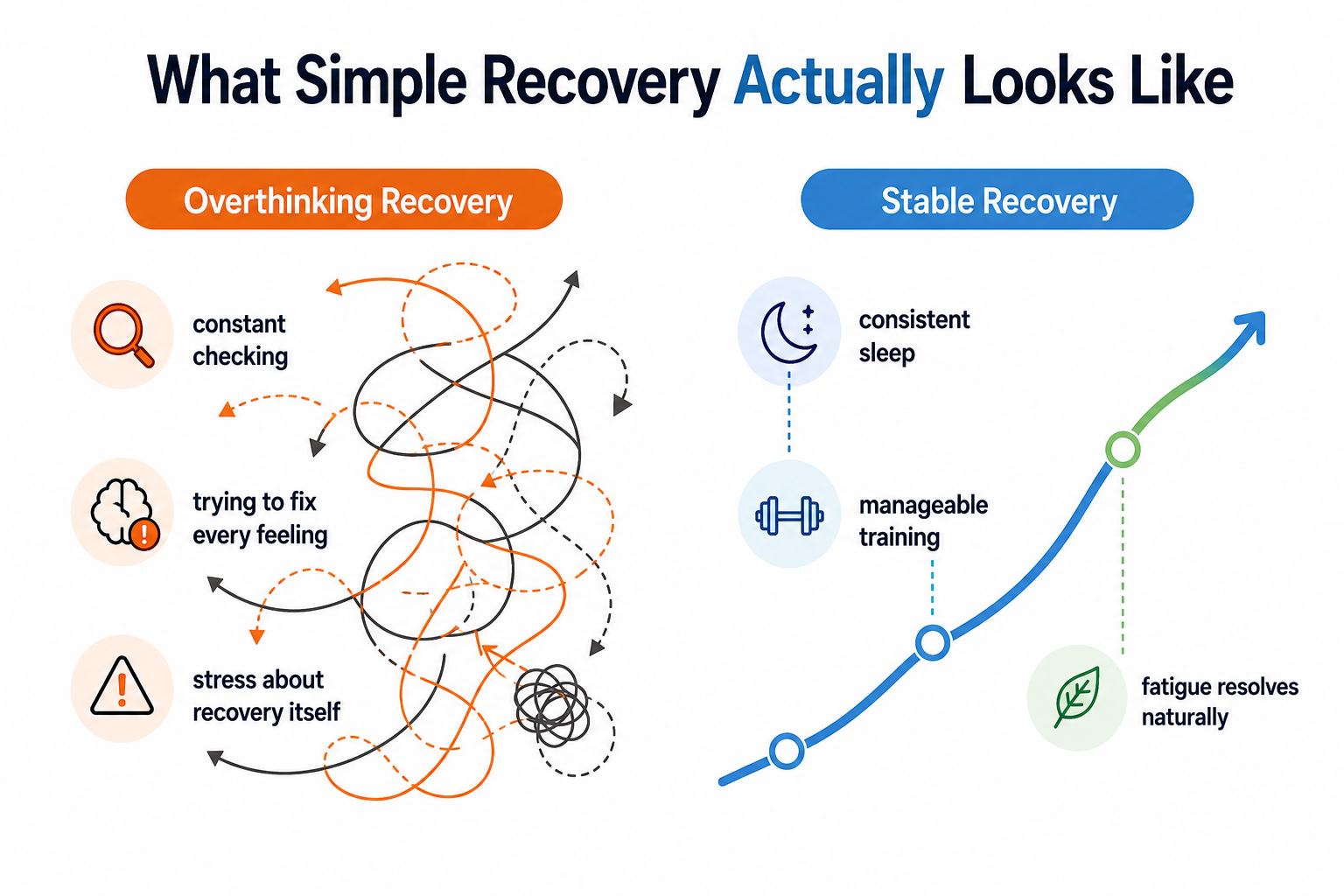
Over time, recovery itself becomes stressful.
But most effective recovery is actually much less complicated than runners often assume.
The body already knows how to recover. The real challenge is usually creating enough consistency, stability, and reduced stress for that recovery process to happen properly.
This is one reason many experienced runners appear calmer about recovery than newer runners expect. They understand that the body does not require perfect optimization every day.
It usually responds best to stable habits repeated consistently over time.
Modern running watches allow you to track pace, distance, heart rate, cadence, VO2 max and much more during workouts.
If you’re choosing one for training, see our guide to the Best Running Watches for Running (2026).
Recovery Is Mostly About Removing Excess Stress
One reason recovery becomes confusing is that runners often think recovery must always involve actively doing something.
But in many cases, good recovery is less about adding more interventions and more about removing unnecessary strain.
The body recovers when it has enough space to recover.
That space usually comes from very basic things done consistently:
enough sleep,
manageable training structure,
sufficient food intake,
and controlled overall stress.
Those factors influence recovery much more than constantly searching for advanced optimization strategies.
This is also why runners sometimes overcomplicate recovery after difficult training blocks. They begin adding more routines, more tracking, and more recovery “solutions,” even though the body may simply need slightly less stress and slightly more consistency.
Understanding how to know if you’re recovering properly between runs becomes important here, because recovery is often easier to recognize through stable energy, stable effort, and predictable training response than through constantly chasing perfect freshness.
The Body Does Not Recover Perfectly Every Day
One of the biggest mistakes runners make is expecting recovery to feel complete all the time.
But normal training almost always includes some level of background fatigue.
Some days the legs feel lighter. Some days they feel flatter. Some runs feel smooth immediately, while others take time before the body settles into rhythm properly.
That variability is normal.
The mistake is assuming every slightly difficult feeling means recovery has failed.
In reality, the body is constantly balancing adaptation and fatigue at the same time. Recovery is not a switch that suddenly turns you from tired into perfectly fresh again. It is an ongoing process happening underneath training continuously.
This is closely connected to what “good fatigue” vs “bad fatigue” actually feels like, because productive fatigue often includes temporary heaviness that still resolves normally over time.
Why Constant Monitoring Can Become Counterproductive
Metrics can be useful, but recovery becomes harder when runners start treating every small fluctuation as a problem that requires immediate interpretation.
One low recovery score does not necessarily mean training should change completely. One tired run does not automatically mean fitness is collapsing. The body naturally fluctuates from day to day.
This is especially important now that many runners constantly monitor sleep scores, HRV trends, resting heart rate, and recovery metrics simultaneously.
The more signals you monitor, the easier it becomes to overreact to temporary variability.
Experienced runners usually pay more attention to patterns than isolated readings.
They look for whether recovery stabilizes over time rather than whether every single day feels perfect individually.
This is also why understanding why some weeks feel harder even when training is the same becomes useful, because recovery capacity naturally changes even when the training plan itself stays stable.
Recovery usually works best when the body has enough stability to resolve fatigue naturally over time.
Consistency Is Usually More Powerful Than Optimization
Most runners do not need perfect recovery routines.
They need sustainable ones.
A stable sleep schedule repeated consistently will usually help more than constantly searching for advanced recovery techniques. A manageable training structure usually improves recovery more than endlessly adjusting individual workouts. Even small reductions in unnecessary stress often improve recovery more than adding more recovery tools.
This is one reason long-term running development tends to reward consistency much more than perfection.
The body adapts surprisingly well when stress and recovery remain balanced over time.
It struggles much more when training constantly swings between excessive pressure and aggressive recovery attempts.
A comfortable long run shoe can also reduce mechanical fatigue during higher-volume periods and help recovery feel more manageable week to week.
Best Running Shoes for Long Runs explains which models tend to feel easiest on the legs during sustained endurance training.
Conclusion
Recovery becomes much easier once runners stop expecting it to feel perfect all the time.
The body naturally fluctuates. Some days feel lighter, others heavier. Some weeks feel smooth, others slightly flat. That variability is part of normal training, not automatic evidence that something is wrong.
Most effective recovery comes from consistency rather than constant optimization.
Enough sleep, manageable training load, stable routines, and patience usually support recovery far more effectively than trying to control every small signal the body produces.
Because recovery is not about eliminating all fatigue.
It is about allowing fatigue to resolve naturally often enough for adaptation to continue moving forward.
Frequently Asked Questions
Is it normal to feel slightly tired even during good recovery?
Yes. Normal training usually includes some background fatigue. Recovery does not mean feeling perfectly fresh every single day.
Can recovery become worse from overanalyzing it?
Yes. Constantly monitoring every small fluctuation can create unnecessary stress and lead runners to overreact to normal variability.
Do I need advanced recovery methods to improve?
Usually not. Consistent sleep, balanced training, and manageable overall stress support recovery far more than most advanced recovery tools.
How do I know if recovery is actually becoming a problem?
Recovery problems usually appear through longer-term patterns such as persistent heaviness, unstable effort, and fatigue that no longer resolves between runs.
Should I completely rest whenever I feel tired?
Not always. Mild fatigue is a normal part of training. The important question is whether the body continues recovering consistently over time.