
Training Structure
This section collects guides, comparisons, and practical insights to help runners train smarter. From understanding key metrics to choosing the right gear and building effective training habits, each article focuses on clear, actionable knowledge for consistent progress.
-

Rowing vs Running: What Actually Changes?
Rowing vs Running Running and rowing can challenge the same aerobic system while asking the body to produce that effort in very different ways. There is a particular kind of confusion that can happen the first time a runner spends serious time on a rowing machine. Your heart rate rises.…
-

Is Rowing Good Cross-Training for Runners?
Is Rowing Good Cross-Training? Rowing can train a runner’s aerobic system surprisingly well. What it removes is impact, not effort. Rowing can look easier than it feels. You sit down, strap your feet in and begin moving through a rhythm that seems almost too controlled to produce the kind of…
-

Elliptical vs Easy Run: Can You Replace an Easy Run?
Elliptical vs Easy Run There are days when an easy run is exactly what your training plan says you should do, but running itself doesn’t seem particularly useful. Maybe your legs are carrying more soreness than expected from yesterday’s workout. Maybe you’ve accumulated several days of running and another hour…
-

Swimming for Runners: Does It Actually Improve Running?
Swimming for Runners I’ve started noticing that swimming is one of those activities runners almost automatically think about when something isn’t quite right. A small injury appears. The weather becomes unbearably hot. Recovery seems to take longer than usual. Before long, someone suggests replacing a few runs with swimming. At…
-

Cycling vs Running for Aerobic Fitness: Which Builds Better Endurance?
Cycling vs Running for Aerobic Fitness I’ve started noticing that many runners eventually reach the same point in their training. They want to improve their endurance, but they don’t necessarily want to keep adding more running miles. Sometimes it’s because they’re recovering from a demanding training block. Sometimes it’s to…
-

When to Replace a Run With a Ride
When to Replace a Run With a Ride If you look at a marathon training plan on paper, every session seems to have a clear purpose. Easy runs build your aerobic base. Long runs improve endurance. Faster workouts prepare you for race pace. It all looks wonderfully organized. Real life,…
-

Is Cycling Good for Runners?
Is Cycling Good for Runners? If you spend enough time around experienced runners, you start noticing an interesting pattern. Quite a few of them own a bike. At first, that might seem a little surprising. If someone wants to become a better runner, wouldn’t it make more sense to simply…
-

How to Combine Strength Training with Running Properly
Strength training sounds simple on paper. Add a few sessions. Get stronger. Run better. But in practice, it often feels like it doesn’t quite fit. Your legs feel heavier. Runs feel less smooth. And instead of helping, strength training starts to feel like it’s getting in the way. That’s where…
-

How to Structure a Week When You’re Tired
You feel it in the first run. Your legs are heavier. Your energy is lower. Things that usually feel manageable take more effort.At that point, many runners try to push through. They follow the original plan. They keep the same intensity.They try to make the week look normal. But tired…
-
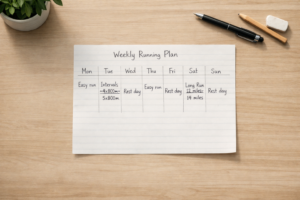
What Makes a Training Week Actually Effective
It’s easy to look at a week of training and focus on the individual runs. A long run. A faster session. A few easy days in between.And if those runs feel good on their own, it’s tempting to assume the whole week worked. But training doesn’t really work like that.…