Most runners have some version of the same idea in their head.
A good run should feel controlled. Productive. Not too easy, but not too hard either.
That sounds sensible until you spend enough time actually training.
Then something confusing starts to happen.
One day a run feels smooth, light, and almost automatic. A few weeks later the exact same pace feels awkward. Or the opposite happens: something that once felt like work starts to feel almost too manageable. That is where many runners start second-guessing themselves. They stop asking whether the run matched its purpose and start asking whether it felt good enough to count.
The real answer is that a good run does not have one fixed feeling.
It changes with fitness, fatigue, experience, and training purpose. What feels like good effort at one stage may be too hard, too easy, or simply misplaced at another.
If you want your running to feel more consistent and comfortable, the gear you use can make a difference.
The right shoes help reduce unnecessary strain and support smoother movement.
If you’re unsure what to choose, take a look at our guide to the Best Running Shoes for Daily Training (2026).
A good run is not one feeling
A lot of runners quietly assume that a good run should sit in some middle zone of effort. It should not feel lazy, but it should not feel draining either. The idea sounds reasonable, but it breaks down quickly because training is not built on one universal sensation.
An easy run should not feel like a tempo run.
A long run should not feel like an interval session.
A recovery jog should definitely not feel productive in the same way a hard workout does.
If you expect every run to feel equally satisfying, you will almost always push some sessions too far.
That is why it helps to stop using the phrase good run as a single standard. A good run is simply one that matched its job. Sometimes that means the run felt smooth and light. Sometimes it felt steady and demanding. Sometimes it felt almost underwhelming, which is exactly why it worked.
If you have ever felt confused by that, it helps to read what easy pace actually means and why easy runs feel too hard, because both explain why productive training often feels less dramatic than runners expect.
Fitness changes how effort feels
This is the part many runners underestimate. Fitness does not just change your pace. It changes your interpretation of effort.
When you are newer to running, a genuinely good aerobic run may feel clumsy, slow, and even slightly frustrating. You may think you are underperforming because the effort feels almost too restrained. But that same sensation, months later, may feel normal. The body learns rhythm. You settle into effort more naturally. Your breathing becomes less chaotic. What once felt strangely slow starts to feel controlled and appropriate.
The opposite can happen too. As fitness improves, you may start pushing easy runs a little too much without realizing it. The run still feels good, but now it feels good because you are drifting into moderate effort. That is where many runners make mistakes. They think improvement means every run should start feeling stronger, sharper, and faster. In reality, improved fitness should make the right effort feel easier, not turn every day into a performance check.
Many experienced runners eventually realize that better pacing usually comes from clearer internal awareness — not from constantly adding more smartwatch features. That is also why many elite runners still prefer surprisingly simple devices focused mainly on pacing, GPS accuracy, and training consistency.
Best Running Watches Used by Elite Runners (And Why Simpler Often Wins)
Good effort is not a fixed pace or sensation. It is a moving target shaped by your current fitness and by the purpose of the run.
A good run depends on what the run was supposed to do
This is the simplest way to think about it. Before judging whether a run was good, ask what it was for.
If it was an easy run, a good run often feels almost too calm. You can breathe normally. Your stride feels unforced. You finish with the sense that you could have continued. It may not feel impressive, but it leaves your system ready to absorb more training. That is what makes it good.
If it was a tempo run, a good run should feel concentrated and sustainable but clearly demanding. You are working, but not fighting. The effort asks for attention. You know you are training, but you do not feel like you are hanging on for survival. This is why tempo runs sometimes feel harder than expected and why many runners need time to learn that steady discomfort is part of the point.
If it was an interval session, a good run often feels more manageable than expected because the work comes in pieces. The effort is high, but the breaks create rhythm. That can make intervals feel more rewarding even when they are harder on paper.
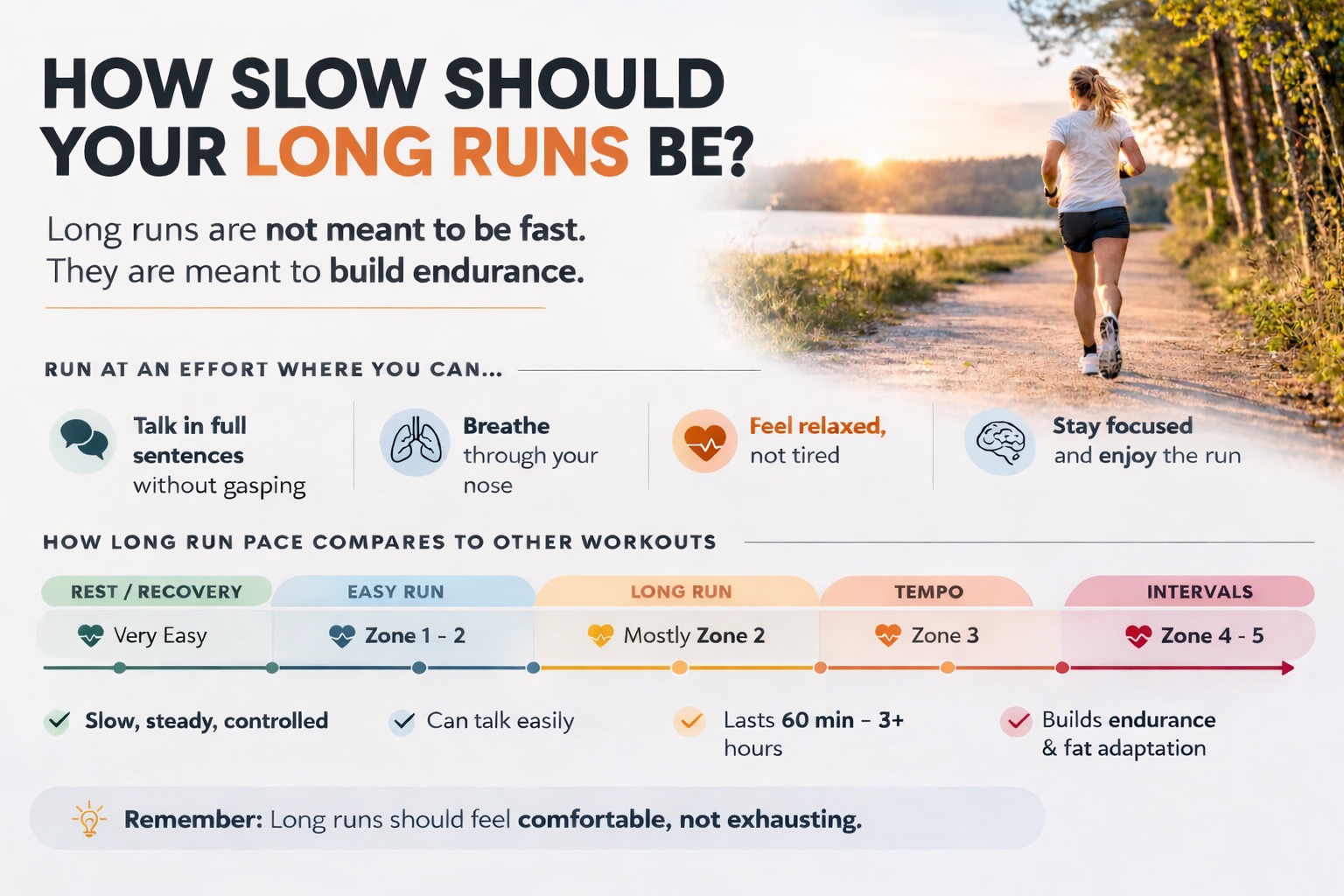
If it was a long run, a good run feels controlled for longer than usual. The goal is not to feel explosive. The goal is to hold form, breathing, and patience together over time. That is why how slow long runs should be matters more than many runners think.
The biggest mistake is chasing the feeling of productivity
One of the hardest habits to break is the belief that a good run must feel productive in an obvious way.
Runners like feedback. A hard workout gives feedback. A strong pace gives feedback. Heavy breathing gives feedback. But a lot of good training is quieter than that. Easy runs, recovery runs, and restrained long runs work because they do not ask for proof in the moment. Their value shows up later, in consistency, recovery, and improved durability.
That is why chasing the feeling of a good run can become dangerous. If you always want a run to feel meaningful, you will start pushing sessions that were never meant to become hard. The training week may feel more satisfying in the short term, but the structure starts to blur. Then progress stalls, fatigue builds, and you begin to wonder why running suddenly feels harder than it should.
This is also where a reliable device can help if you tend to overcook your easy days.
A good watch or heart rate monitor can give just enough external restraint to keep you honest, which is exactly why a guide like Best Running Watches for Running can be a useful next step if effort keeps drifting faster than planned.
What good effort feels like at different stages
A runner at one stage of development may describe a good run as simply finishing without blowing up. Another runner may describe a good run as feeling rhythm, control, and precision. Both can be right.
Earlier on, good effort often feels like keeping things under control at all. The body is still learning how to settle. Pacing is inconsistent. Easy runs can feel strangely hard even when they are correct.
As fitness improves, good effort starts to feel smoother rather than harder. You notice less internal noise. Breathing steadies earlier. You stop fighting the run so much. This does not mean you are working less. It means you are matching the task better.
At a higher level, good effort often feels almost boring on easy days and very specific on hard days. There is less confusion because the runner has learned what different sessions are supposed to feel like. That is one reason how to tell if your running is improving is not just about pace. Better runners usually become better at interpreting effort too.
The better your training gets, the less you ask whether the run felt good in general and the more you ask whether it felt right for that day.
What good effort feels like changes as fitness improves
The point is not to chase one perfect feeling. The point is to match effort to the purpose of the day. As fitness improves, the same “good run” sensation usually becomes calmer, smoother, and more accurate.
Learning control
Good effort often feels slightly awkward at first. Easy runs can still feel harder than expected because pacing and rhythm are not settled yet.
Finding rhythm
As fitness grows, a good run starts to feel smoother. You spend less energy fighting the run and more time sitting in the right effort.
Reading effort well
At a higher level, easy runs often feel almost boring, while harder sessions feel more specific and controlled. Accuracy matters more than drama.
A better runner is not just faster. A better runner is usually better at knowing what the day is supposed to feel like.
So what are you actually aiming for
You are not aiming for one ideal sensation.
You are aiming for accuracy.
A good run feels appropriate to its purpose. Easy days feel easier than your ego wants. Hard days feel hard in a controlled, targeted way. Long runs feel patient. Recovery runs feel almost too light. Over time, the quality of your training improves not because every run feels better, but because each run feels more correctly placed.
That is a much more useful goal than trying to make every session feel productive.
If you want a simple filter, use this question at the end of a run: did this run give me what the day was supposed to give me? If the answer is yes, it was probably a good run, even if it did not feel impressive.
If you are unsure whether your current training paces match your actual fitness, the Running Pace Zone Calculator can help estimate more practical pace ranges for easy runs, tempo sessions, and interval work.
Frequently Asked Questions
Should effort feel the same over time?
No — it evolves as your fitness improves.
Why do runs feel different even at the same pace?
Because your internal state changes from day to day.
Is effort more important than pace?
Yes — effort determines how your body responds.
Will running feel easier as I improve?
Yes — that’s one of the clearest signs of progress.
Understanding effort becomes much easier when you have a reference point.
A reliable heart rate monitor helps you see how your body responds at different effort levels — see Best Heart Rate Monitors for Running (2026).
Key Takeaway
“Good effort” is not a fixed feeling.
It changes as your fitness changes.