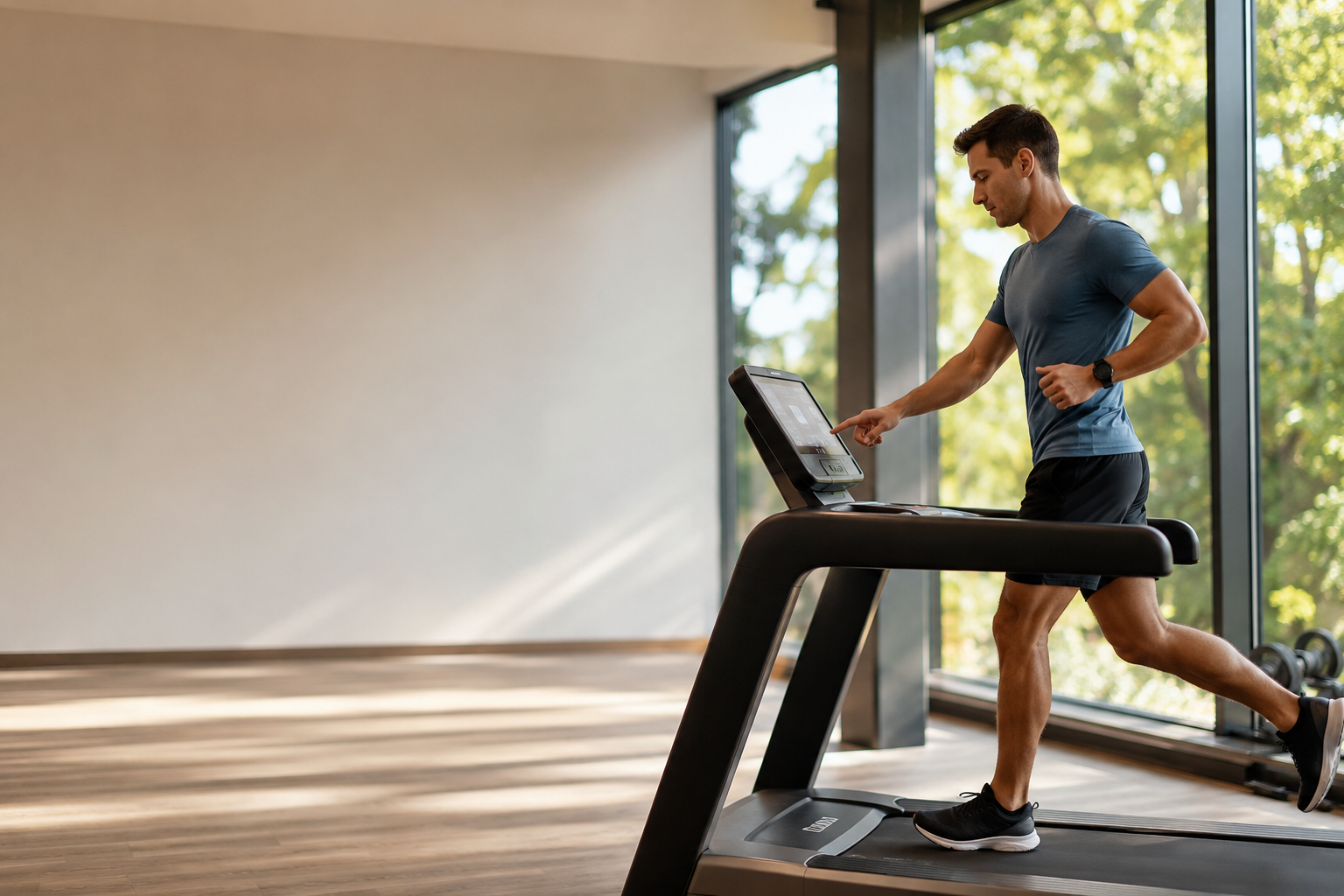
One of the first pieces of treadmill advice most runners hear is surprisingly simple. Set the incline to 1%. It sounds wonderfully precise. The problem is that many runners are never told why.
Does one percent make treadmill running identical to running outside? Should every run use the same incline? What about easy runs, intervals, hill workouts, or recovery sessions?
I’ve started noticing that this single recommendation often creates more confusion than confidence. Instead of understanding what incline actually changes, runners end up treating one percent as a rule that must always be followed. I don’t think treadmill running works quite that way. Incline is simply another tool.
Sometimes it helps the treadmill better reflect outdoor running. Sometimes it deliberately creates a different kind of training stimulus. And sometimes leaving the incline at zero percent is a perfectly sensible decision. I honestly believe that understanding what incline does is far more useful than memorising one number.
Because once you understand the purpose, choosing the right setting becomes surprisingly straightforward.
What Incline Actually Changes
I think one of the biggest misconceptions about treadmill incline is that it somehow makes the treadmill feel exactly like running outdoors. It doesn’t.
What incline really changes is the amount of work your body has to do.
When the front of the treadmill rises, your body has to generate a little more force with every stride. Your calves, glutes, and hamstrings contribute slightly more, your heart rate usually increases at the same pace, and maintaining the same speed begins to require a little more effort. That is exactly what incline is designed to do.
It changes the workload.
What it does not do is recreate everything about running outside. It cannot create changing wind, subtle terrain variations, corners, downhill sections, or the countless tiny adjustments your body naturally makes on roads and trails. Those differences remain, regardless of the incline setting.
I’ve started noticing that runners often expect one percent incline to magically transform a treadmill into an outdoor road. I honestly believe that expectation creates unnecessary confusion.
A one percent incline is simply a practical approximation. It slightly increases the workload, helping compensate for some of the resistance that naturally exists outdoors, particularly at moderate and faster running speeds.
It is not a magic number. It is a reasonable starting point. To me, this is the most useful way to think about treadmill incline. It is another way of adjusting training load, just like changing pace or extending the duration of a run.
This idea connects naturally to Is Treadmill Running As Good As Outdoor Running?, because incline influences how hard your body works, while the overall training effect still depends primarily on the total workload you complete.
Should Every Treadmill Run Use The Same Incline?
One thing I’ve started noticing is that runners often search for the perfect incline in the same way they search for the perfect running shoe or the perfect heart rate. The assumption is that one setting must work for everything. I don’t think the body works that way.
Every run has a different purpose, so it makes sense that incline can have a different purpose as well.
Imagine an easy recovery run. The goal is not to make the session harder. It is to allow your body to recover while maintaining gentle aerobic activity. In that situation, leaving the treadmill at zero or one percent may both be perfectly reasonable choices. The exact number matters much less than keeping the effort comfortably easy.
Now think about a tempo run. A slight incline may help maintain a workload that feels closer to running outdoors, especially if the pace is relatively fast. The difference is usually subtle, but enough to slightly increase the demand on your cardiovascular system without changing the structure of the workout.
Then there are hill sessions. In that case, incline is no longer being used to imitate outdoor running. It becomes the workout itself.
I’ve started noticing that experienced runners rarely ask, “What incline should I always use?” Instead, they ask, “What am I trying to achieve today?”
That is a much better question. I honestly believe incline becomes much easier to understand once you stop thinking of it as a rule and start treating it as another training variable. Just like pace, duration, or recovery time, it should support the purpose of the session rather than dictate it.
To me, this is why debates about zero versus one percent sometimes miss the point entirely. The right incline is simply the one that helps today’s workout achieve today’s goal.
This idea connects naturally to Why Treadmill Running Feels Different, because the success of any session depends more on matching the intended training stimulus than on following one fixed setting.
Why One Percent Is A Guideline, Not A Rule
I think one of the reasons the one percent recommendation has survived for so many years is that it is simple. Simple advice spreads quickly. The reality is a little more nuanced.
The original idea came from research suggesting that a slight incline can help offset some of the factors that are naturally present outdoors, particularly at moderate to faster running speeds where wind resistance begins to play a more noticeable role.
That does not mean every treadmill run suddenly becomes “correct” at one percent. Nor does it mean zero percent is somehow wrong.
I’ve started noticing that many runners become surprisingly anxious about choosing exactly the right setting, when the actual physiological difference between zero and one percent during an easy run is often very small. What matters far more is whether the overall effort matches the purpose of the session.
I honestly believe this is one of those situations where precision can become slightly misleading. A runner who keeps an easy run genuinely easy at zero percent is usually much closer to the intended training stimulus than someone who insists on one percent but accidentally turns the session into moderate effort.
The body responds to the total stress it experiences. Not to whether the display showed zero or one. To me, this is why treadmill incline should always remain a tool rather than a rule. It can help fine-tune the workload, but it should never distract you from the bigger objective of completing the right session at the right effort.
This idea connects naturally to How to Decide Your Effort Mid-Run (Without Metrics), because successful training is usually guided by matching the intended effort rather than following one fixed number.
Treadmill Incline Is A Training Variable
Easy Or Recovery Run
Keep the effort controlled. The goal is gentle aerobic work, not making the treadmill feel harder.
Steady Or Tempo Run
A slight incline can help create a workload that feels closer to steady outdoor running.
Hill Session
Incline becomes the workout itself, creating a specific climbing or strength stimulus.
The workout purpose is the goal.
Incline Should Support The Workout, Not Define It
I honestly believe that treadmill incline sometimes receives more attention than it deserves. Not because incline is unimportant. Because it is only one small part of a much bigger picture.
A runner can choose the perfect incline and still turn an easy run into a workout that is unnecessarily hard. Another runner might leave the treadmill completely flat while matching the intended effort perfectly.
The body will almost always respond more to the overall workload than to one specific setting. I’ve started noticing that experienced runners rarely become attached to a particular incline. Instead, they adjust it only when it helps today’s session achieve its purpose more effectively.
Sometimes that means using a slight incline to better match a steady outdoor effort. Sometimes it means increasing the incline to create a hill workout. And sometimes it means leaving the treadmill exactly as it is because nothing needs changing. I think this is where treadmill training becomes refreshingly simple.
Instead of asking whether one percent is correct, you begin asking whether today’s settings are helping you complete today’s workout exactly as it was designed.
That question almost always leads to a better decision.
If you’re unsure whether your treadmill pace still matches the intended training intensity, the Running Pace Zone Calculator can help estimate appropriate pace ranges for different types of runs. And if you’re looking for shoes that feel stable and comfortable during both treadmill and outdoor sessions, our guide to the Best Running Shoes for Daily Training compares versatile models designed for everyday mileage.
Conclusion
Setting the treadmill incline properly is less about finding one perfect number and more about understanding what today’s run is trying to accomplish. A slight incline can be useful.
Hill workouts can be extremely valuable. A completely flat treadmill can also be the right choice.
None of those settings are automatically correct or incorrect on their own. I think that is one of the most useful things to remember.
Incline changes the workload. It does not change the purpose of the workout.
Once you understand that distinction, choosing the right setting becomes much simpler. You stop looking for universal rules and start making decisions that match the session in front of you. That is usually how good training works. Not by following one perfect number. But by understanding why that number exists in the first place.
Frequently Asked Questions
Should I always set my treadmill to 1% incline?
No. One percent is a useful guideline, particularly for steady and faster running, but it is not a rule that applies to every workout.
Is 0% incline bad?
Not at all. For many easy runs, recovery sessions, or situations where the goal is simply maintaining aerobic volume, a flat treadmill can work perfectly well.
Does a higher incline burn more calories?
Generally yes. Running uphill increases the workload, meaning your muscles and cardiovascular system have to work harder than they would at the same speed on a flat treadmill.
Is 1% incline enough to simulate outdoor running?
It helps approximate some aspects of outdoor running, particularly the additional energy cost at moderate and faster speeds. However, it cannot recreate wind, changing terrain, or the many small adjustments that naturally occur outside.
Should I use incline during interval workouts?
It depends on the goal. If the workout is designed to improve speed at a specific pace, a slight incline may be sufficient. If the workout specifically targets hill running or climbing strength, a steeper incline becomes part of the training stimulus itself.