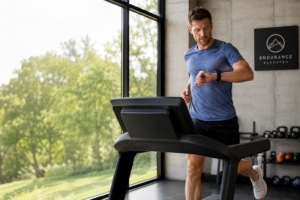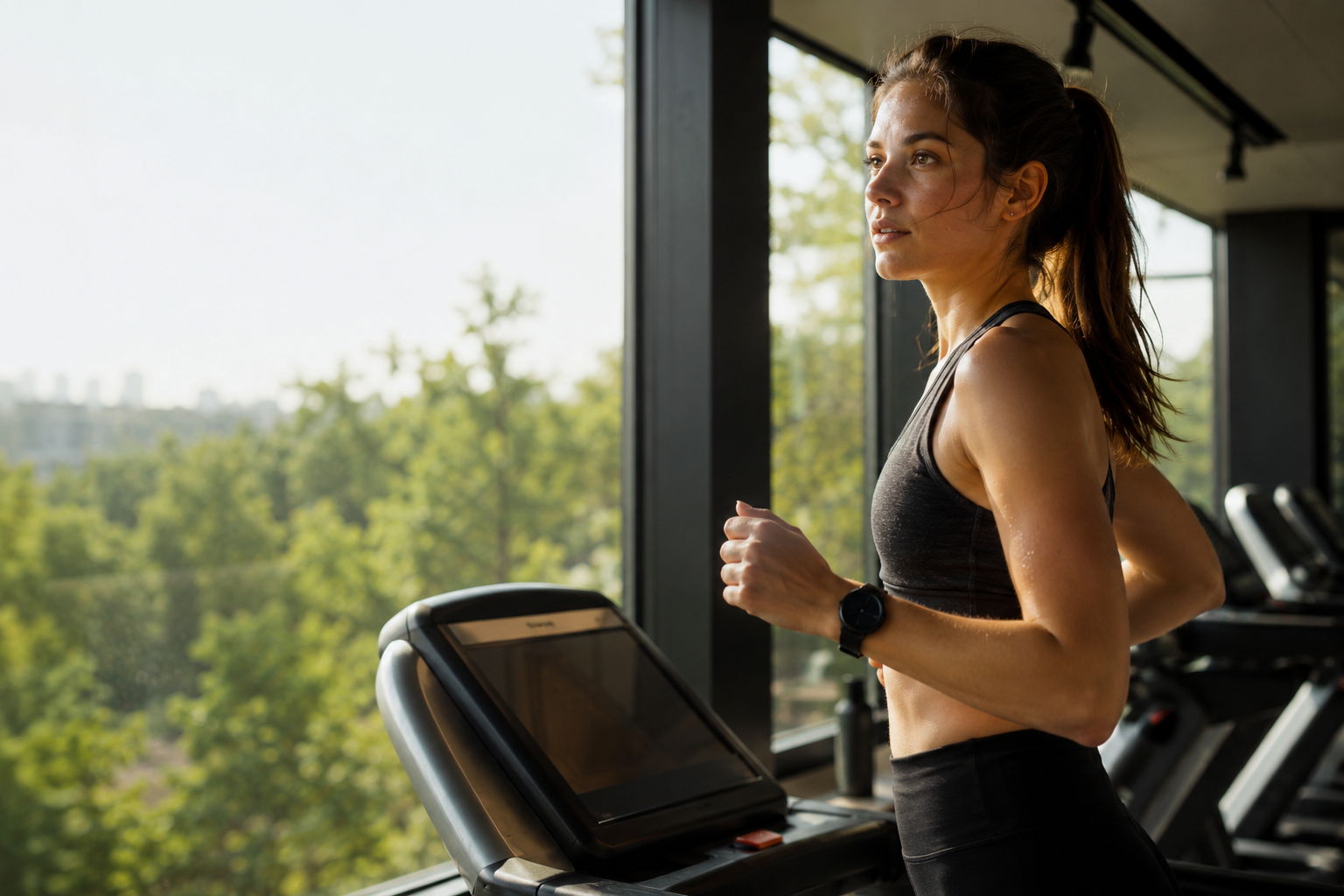
I think almost every runner notices it within the first few minutes. The pace may be familiar. The heart rate may look normal. The effort may even match what you expected. And yet, the run somehow feels different.
Some runners describe treadmill running as easier. Others say it feels harder. Many simply say it feels strange without being able to explain exactly why.
I’ve started noticing that this often creates unnecessary doubt. If the run feels different, many runners assume the training must also be different. The interesting thing is that feeling different and working differently are not always the same thing.
Your body is moving in a different environment, processing different information, and responding to slightly different movement demands. That naturally changes the experience, even when the physiological training effect remains remarkably similar.
I honestly believe that understanding why treadmill running feels different makes it much easier to use it with confidence instead of constantly comparing it with outdoor running.
Why Your Brain Notices The Difference Before Your Muscles Do
One thing I’ve started noticing is that runners often assume the feeling of a run comes entirely from their muscles and lungs. In reality, your brain plays just as important a role.
When you run outdoors, your senses are constantly processing new information. The scenery moves past you. Small changes in the ground alter every step. Your eyes judge distance, your balance reacts to subtle changes in direction, and your body continuously makes tiny adjustments without asking for your attention.
It is an incredibly dynamic process. A treadmill changes almost all of that.
Your surroundings remain almost perfectly still. The belt moves beneath your feet at a constant speed. Your gaze often stays fixed on the same point for long periods, while your movement through space is almost entirely absent.
Your muscles may be producing a very similar effort. Your brain is processing a completely different environment.
I honestly believe this is one of the biggest reasons treadmill running feels unusual at first. The physical workload may feel familiar, but the sensory experience is not. That difference does not mean something is wrong.
It simply means your nervous system is receiving different information than it normally does during an outdoor run.
Over time, I think many runners gradually adapt to this as well. The more time you spend on a treadmill, the less unusual it begins to feel—not because the treadmill has changed, but because your brain has learned what to expect.
This idea connects naturally to Is Treadmill Running As Good As Outdoor Running?, because the environment changes how the run feels without necessarily changing the training effect.
Why Treadmill Running Feels Different
Less Visual Change
Outside, scenery constantly moves past you. On a treadmill, your view stays almost the same.
Less Balance Demand
Outdoor running asks for constant small adjustments. The treadmill keeps the surface predictable.
More Repetition
The belt moves at a steady rhythm, which can make the run feel more mentally repetitive.
More Attention On Effort
With fewer distractions, your brain may notice every minute and every sensation more clearly.
Fewer Outdoor Variables
Wind, terrain, turns, and traffic disappear, changing how the same effort is experienced.
Similar Workload
Your body still responds to duration, effort, and intensity, even when the experience feels different.
Your brain is processing a different environment.
Why Time Often Feels Slower On A Treadmill
I think one of the biggest surprises about treadmill running has very little to do with fitness. It has to do with attention.
When you run outside, your mind is constantly occupied without you even realizing it. You notice traffic, changing scenery, other runners, small hills, road crossings, and countless tiny decisions that naturally divide the run into smaller pieces.
Time quietly disappears into the environment. A treadmill removes most of those distractions. The pace stays the same. The surroundings barely change. Even your field of vision often remains fixed for long periods. Suddenly, your attention has far fewer places to go.
I’ve started noticing that this is why many runners describe treadmill running as mentally harder than outdoor running. The physical effort may be almost identical, but the brain becomes much more aware of every passing minute. The workout has not necessarily become more difficult. It has simply become more noticeable.
I honestly believe this is one of the reasons some runners underestimate treadmill training. When a run feels mentally longer, it is easy to assume it must also be physically harder.
Those are not always the same thing. Over time, many runners naturally adapt to this as well. As treadmill running becomes more familiar, the mind gradually stops paying attention to every minute, allowing the session to feel much more natural.
To me, this explains why experienced treadmill users often describe indoor running very differently from beginners. The physical adaptation happens relatively quickly.
The mental adaptation simply takes a little longer.
This idea connects naturally to Why Good Training Often Feels Boring, because repetitive environments naturally make you more aware of the passage of time, even when the training itself remains highly productive.
Feeling Different Does Not Mean Training Differently
One thing I’ve started noticing is that runners often use feeling as proof. If a treadmill run feels unfamiliar, they assume it must also be producing a different training effect. If an outdoor run feels more natural, it somehow seems more authentic.
The body doesn’t always make those same assumptions. I think this is where our intuition can become slightly misleading. We naturally associate familiarity with effectiveness and unfamiliarity with compromise. But training adaptation rarely follows those emotional shortcuts.
Your aerobic system is responding to physiological stress, not to whether the scenery is changing outside the window. That is why two runs can feel remarkably different while producing a surprisingly similar training stimulus. The feeling belongs to the experience. The adaptation belongs to the workload.
I’ve started noticing that this distinction becomes easier to understand after runners spend more time using both environments. Instead of asking which one feels more like “real running,” they begin asking whether today’s session delivered the effort their training plan intended. That is a much more useful question. It shifts the focus away from preference and toward purpose.
I honestly believe this is where treadmill running starts becoming a genuinely valuable training tool rather than a backup option. Once you stop expecting it to recreate outdoor running, you can begin appreciating it for what it actually does exceptionally well.
To me, this is one of the quiet lessons every experienced runner eventually learns. Different experiences do not automatically create different adaptations. They often create the same adaptation through a different journey.
This idea connects naturally to Why You Should Not Judge Fitness From One Workout, because how a session feels is only one part of understanding what your body is actually adapting to.
The Goal Is Not To Make A Treadmill Feel Like The Road
I honestly believe that many runners spend unnecessary energy expecting treadmill running to feel exactly like running outdoors. The interesting thing is that it probably never will. And it doesn’t need to.
A treadmill creates a different running experience because it removes many of the small variables that naturally exist outside. Your brain notices those differences immediately, while your body quietly continues responding to the training itself.
Once you understand that, the comparison becomes much less important.
I’ve started noticing that experienced runners rarely judge a treadmill session by asking whether it felt like outdoor running. Instead, they ask something much simpler. Did today’s run accomplish what it was supposed to accomplish? If the answer is yes, then the session has already done its job. The surroundings become secondary.
I think this is one of the most useful mindset shifts a runner can make. Instead of trying to recreate one environment inside another, you begin appreciating each one for what it naturally offers.
Outdoor running gives you movement through the world.
Treadmill running gives you remarkable control over the training stimulus.
Both can be valuable. Both can help you become a stronger runner.
To me, this is where treadmill running stops feeling like a compromise. It simply becomes another way to complete good training consistently.
If you’re trying to match your treadmill pace to the effort you would normally use outside, the Running Pace Zone Calculator can help estimate appropriate training speeds. And if you’re choosing shoes that perform comfortably both indoors and outdoors, our guide to the Best Running Shoes for Daily Training compares versatile models designed for everyday mileage.
Conclusion
Treadmill running feels different because your brain experiences a different environment. Your eyes see less movement. Your balance makes fewer adjustments. Your attention has fewer places to go.
Those differences are real. But they do not automatically mean your training is less effective. I honestly believe that understanding this removes much of the uncertainty surrounding treadmill running. Instead of wondering why it feels different, you begin understanding why it feels different.
And once that question has been answered, the treadmill becomes much easier to trust. Because the feeling of a run and the value of a run are not always the same thing. Sometimes the experience changes dramatically.
The adaptation changes very little.
Frequently Asked Questions
Why does treadmill running feel harder than running outside?
For many runners, the physical effort is similar, but the environment is much more repetitive. Your brain receives less changing sensory information, making you more aware of the effort and the passage of time.
Why does treadmill running sometimes feel easier?
A treadmill removes variables such as wind, uneven terrain, and frequent pace changes. Some runners therefore find it easier to maintain a steady rhythm and consistent effort.
Does my body know the difference between treadmill and outdoor running?
Your body certainly notices differences in movement and balance, but your aerobic system primarily responds to the duration, intensity, and workload of the session rather than the environment itself.
Will treadmill running make outdoor running feel strange?
Usually only for the first few runs after spending significant time indoors. Your aerobic fitness transfers well, but your nervous system quickly readapts to the constantly changing conditions of outdoor running.
Should treadmill runs feel exactly like outdoor runs?
No. They are different experiences. Expecting them to feel identical often creates unnecessary frustration. The goal is not to make one imitate the other but to use each environment for the strengths it naturally offers.