
Training
This section collects guides, comparisons, and practical insights to help runners train smarter. From understanding key metrics to choosing the right gear and building effective training habits, each article focuses on clear, actionable knowledge for consistent progress.
-

What an Easy Run Should Feel Like? (A Simple Guide)
You have probably heard it many times. Run easy. But what that actually means is not always clear. It is easy to assume that an easy run is simply a slower version of your normal pace. Something relaxed, but still productive. Something that feels like training. In reality, it often…
-

How to Run Slower Without Feeling Awkward
Running slower sounds simple. Until you actually try it. Your pace suddenly feels unusually slow. Other runners seem to pass you more easily. Your rhythm feels slightly off, and instead of relaxing into the run, you become more aware of how unnatural it feels. It can even feel like you…
-

Why Do I Get Tired So Fast When Running? (And How to Fix It)
Some runs feel difficult almost immediately. You start at what should be an easy pace, but within minutes your breathing becomes heavier than expected, your legs already feel slightly tired, and maintaining rhythm requires more effort than it should. For many runners, this becomes frustrating very quickly. It feels like…
-

Why Running Doesn’t Get Easier (And What That Actually Means)
Running was supposed to get easier. You started training consistently. You built routine, improved your pacing, and kept showing up week after week. But despite all of that, running still feels… like effort. Your breathing is still noticeable. Your legs still work. Some runs still feel difficult. And eventually many…
-

Am I Running Too Fast? 5 Signs You Should Slow Down
It usually does not feel obviously fast. You go out for what should be a normal run, settle into a pace that feels reasonably comfortable, and everything initially seems under control. Then gradually something changes. Your breathing becomes slightly more noticeable. Your heart rate climbs faster than expected. Your legs…
-

Running Feels Hard? Here’s Why (Even When You’re Fit)
Running should feel easier by now. You’ve been consistent. You’ve built routine, logged the miles, and kept showing up even on days when motivation was low. So when a normal run suddenly feels heavier than expected, it becomes frustrating very quickly. Your breathing feels unusually noticeable. Your legs lose freshness…
-

What Is a Good Heart Rate for Running? (Easy vs Hard Runs Explained)
Many runners look for a simple answer.What heart rate should I run at? But there isn’t one number that works for everyone. Heart rate is not fixed. It responds to your current state. Your fitness level, age, recovery, temperature, and even stress or sleep all influence how your body reacts…
-

Optical vs Chest Strap Heart Rate: Which Should Runners Use?
A heart rate strap measures your heart rate using electrical signals.Similar to how an ECG works. Instead of estimating blood flow like optical sensors, it detects the actual signal your heart produces. This makes it: → very precise→ very stable→ and extremely fast to respond In comparison, optical sensors (whether…
-
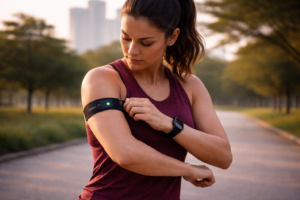
Are Optical Heart Rate Monitors Accurate for Running? (Wrist vs Arm vs Chest)
Most runners assume there’s a simple answer: strap = accurate, optical = not. Reality is a bit more nuanced. Modern optical sensors — especially arm-based ones — have improved a lot.For most training, they are accurate enough to guide your decisions. The real question isn’t perfect accuracyIt’s useful accuracy If the data helps you train…
-

Are Running Watches Accurate? What You Should Actually Trust
Running watches give you a lot of data: ✓ pace✓ heart rate✓ distance✓ VO₂ max✓ running power But how accurate is it really? Some runners trust every number. Others ignore them completely.The truth is somewhere in between. In this guide, you’ll learn: → how to use the data the right…