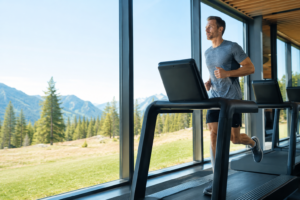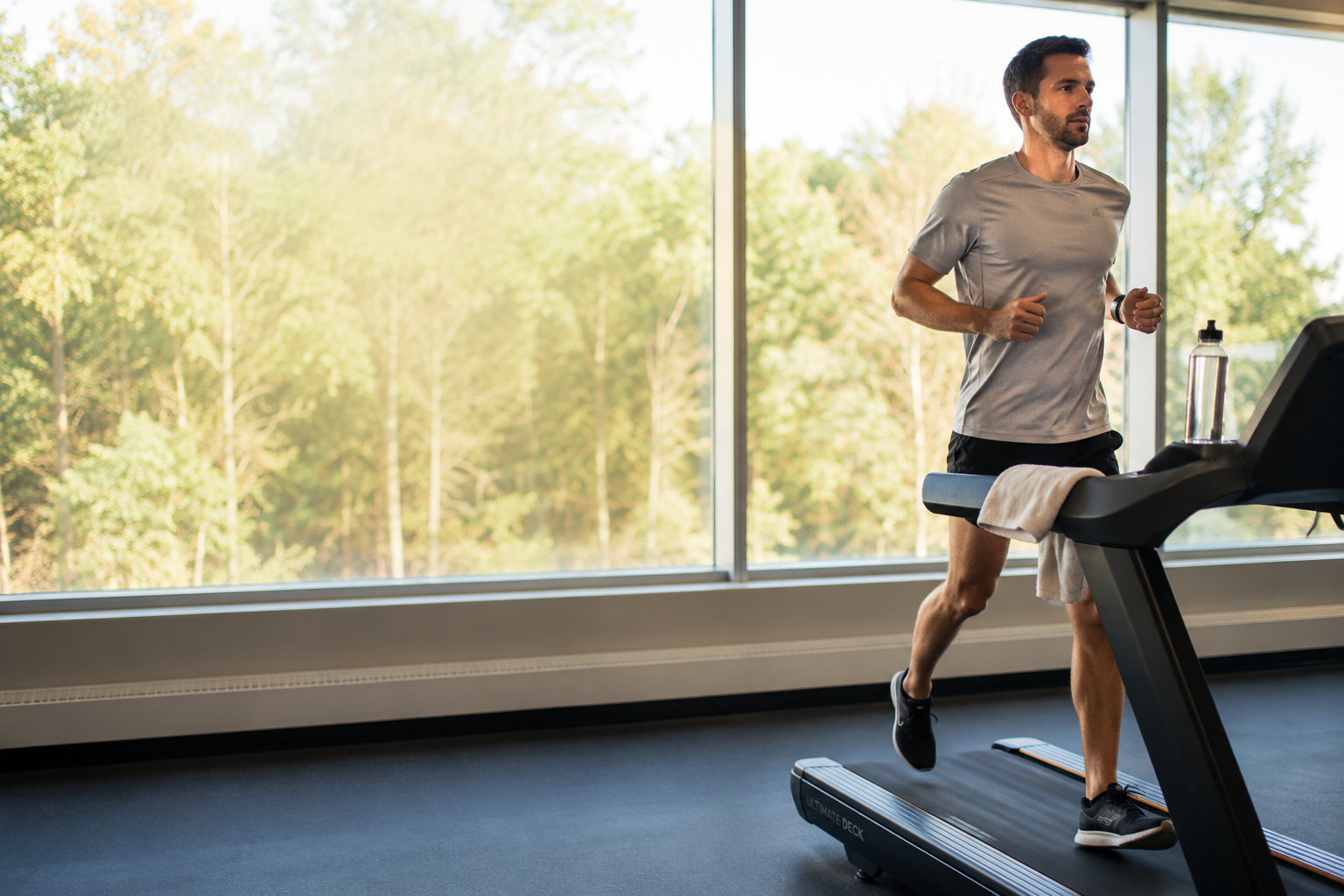
I think this question usually appears when real life starts interfering with ideal training. The weather turns bad. Winter makes outdoor long runs difficult. Summer heat becomes unreasonable. Work schedules shrink daylight. Suddenly the treadmill is no longer just a backup option.
It becomes the place where training can actually happen. And that creates a slightly uncomfortable question.
Can you really train for a marathon on a treadmill?
The reassuring answer is yes, at least much more than many runners think. A treadmill can build endurance, support long runs, help maintain weekly volume, and allow controlled marathon-pace work when outdoor conditions are poor.
But I honestly believe the better answer is a little more nuanced. You can build a large part of marathon fitness on a treadmill.
What you cannot fully build indoors is the complete experience of racing a marathon outside.
That distinction matters, because marathon preparation is not only about having the engine. It is also about learning how that engine behaves on roads, in weather, over changing surfaces, and across several hours of continuous forward movement.
Marathon Fitness Is Built By Workload, Not By Location
One thing I’ve started noticing is that runners often imagine marathon training as something that only happens on open roads.
The long Sunday run. Quiet country lanes. Hours spent moving steadily towards the horizon. Those experiences certainly become part of marathon preparation. But they are not the reason marathon fitness develops.
Your aerobic system does not recognise scenery. It responds to workload.
Every easy run, every long run, every marathon-pace session gradually asks your heart, lungs, muscles, and energy systems to adapt to sustained effort. Whether that effort happens on a quiet road or on a treadmill inside a gym matters far less than many runners expect.
I’ve started noticing that this idea often surprises people. Running for two and a half hours indoors may not feel like a traditional marathon long run, but from the body’s perspective, it can still provide a remarkably similar endurance stimulus.
The adaptation comes from time under load. Not from the view outside.
That doesn’t mean every aspect of marathon preparation is identical indoors.
Far from it. Running economy on changing terrain, learning to manage wind, practising race-day pacing on real roads, and becoming comfortable with the practical realities of outdoor racing all remain valuable parts of preparation.
I honestly believe this is where many discussions become unnecessarily polarised. People ask whether treadmill marathon training “works.” The better question is which parts of marathon preparation the treadmill develops exceptionally well—and which parts still benefit from outdoor running. To me, that distinction makes treadmill training much easier to understand.
It is not replacing marathon training. It is delivering a large part of marathon training through a different environment.
This idea connects naturally to Is Treadmill Running As Good As Outdoor Running?, because both articles explore the same underlying principle: your body primarily adapts to the workload you complete, not to where that workload happens.
What Outdoor Running Still Teaches You
I honestly believe this is where marathon training becomes more than simply building fitness. A marathon is not run in a perfectly controlled environment.
The road constantly changes. A slight headwind appears after twenty kilometres. Small climbs gradually become more noticeable. The road surface varies. Aid stations interrupt your rhythm. Even maintaining marathon pace for several hours requires countless tiny adjustments that happen almost automatically.
A treadmill cannot recreate all of those experiences. It isn’t designed to. I’ve started noticing that runners who prepare almost entirely indoors are often pleasantly surprised by how fit they feel during their first outdoor marathon-pace runs.
What sometimes surprises them even more is that running outside still feels slightly different. Not because they have lost fitness. Because they are asking that fitness to operate in a more complex environment. The body is adapting. The brain is adapting as well.
That is one of the reasons I still think outdoor running deserves a place in marathon preparation whenever circumstances allow. Not because it builds a stronger aerobic engine, but because it teaches that engine how to perform in the environment where race day will actually happen. The good news is that this skill usually develops quite quickly.
A few outdoor long runs, several marathon-pace sessions on real roads, and a chance to practise race-day nutrition and pacing are often enough to reconnect those movement patterns before the marathon.
To me, this is where the treadmill becomes a remarkably useful partner rather than a complete replacement. It can build a large share of your marathon fitness.
Outdoor running teaches that fitness how to express itself on race day.
This idea connects naturally to Why Treadmill Running Feels Different, because the differences you notice between indoor and outdoor running are not only physical—they also reflect how your brain, balance, and movement adapt to changing surroundings.
What Treadmill And Outdoor Running Each Teach
Treadmill Builds
Outdoor Running Teaches
The road teaches that engine how to handle race day.
The Best Marathon Plan Uses Both Environments Wisely
One thing I’ve started noticing is that experienced marathon runners rarely become loyal to one training environment. They become loyal to the purpose of the workout.
If the weather is perfect and today’s session benefits from being outdoors, they head outside. If heavy rain, ice, extreme heat, or a busy schedule would compromise the quality of the workout, they step onto the treadmill without feeling that they are somehow settling for less.
The workout remains the priority. The location simply supports it.
I honestly believe this is one of the biggest mindset shifts a marathon runner can make. Instead of asking whether marathon training should happen indoors or outdoors, ask which environment gives today’s run the best chance of succeeding.
That question usually leads to surprisingly practical decisions. A controlled marathon-pace workout on a treadmill may be far more productive than fighting strong winds simply to prove that every kilometre happened outside.
Likewise, a relaxed outdoor long run several weeks before race day may teach skills that no treadmill can fully reproduce. Neither choice is automatically better. Each serves a different purpose.
To me, this is why treadmill marathon training works so well when it becomes part of a larger plan rather than the entire plan. It provides consistency when consistency matters most, while outdoor running prepares you for the specific demands of race day. That combination is often stronger than relying entirely on either environment alone.
If you’re planning long indoor sessions, Best Types of Workouts for a Treadmill explains which workouts naturally benefit from treadmill training.
If you’re choosing footwear that performs equally well indoors and outdoors, our guide to the Best Running Shoes for Daily Training compares versatile models designed for both environments.
Conclusion
Yes, you can train for a marathon on a treadmill. In fact, you can build a remarkable amount of marathon fitness without leaving the gym.
Your aerobic endurance, weekly mileage, marathon-pace workouts, and long runs can all be developed very effectively indoors.
Where outdoor running still matters is not in creating fitness, but in teaching that fitness how to perform in the environment where the marathon will actually take place.
I think this is one of the most reassuring things about treadmill training. It is not a compromise. It is another way of building the same engine. The road simply teaches that engine how to handle the real world.
When both environments work together, they become partners rather than competitors. And that is often exactly what successful marathon preparation looks like.
Frequently Asked Questions
Can you train for a marathon entirely on a treadmill?
Yes, it is possible to build most of your marathon fitness on a treadmill. However, if your goal race is outdoors, including some outdoor runs before race day helps you adapt to real-world conditions.
Are treadmill long runs effective?
Absolutely. Long treadmill runs develop aerobic endurance in much the same way as outdoor long runs, provided the duration and effort are appropriate.
Should marathon-pace workouts be done on a treadmill?
They can be. A treadmill provides a controlled environment that makes it easier to maintain a steady pace and uninterrupted effort, particularly when outdoor conditions are poor.
How many outdoor runs should I do before a marathon?
There is no fixed number, but most runners benefit from completing several long runs and a few marathon-pace sessions outdoors to become familiar with race-specific conditions.
Is treadmill marathon training easier than outdoor training?
Not necessarily. The controlled environment removes some external challenges, but long treadmill sessions can be mentally demanding in their own way.