
Training
This section collects guides, comparisons, and practical insights to help runners train smarter. From understanding key metrics to choosing the right gear and building effective training habits, each article focuses on clear, actionable knowledge for consistent progress.
-

Why Running Doesn’t Get Easier (And What That Actually Means)
Running was supposed to get easier. You’ve been consistent. You’ve put in the work. But somehow: And at some point, you start wondering: why doesn’t running get easier? The answer is not what most people expect: it actually does — just not in the way you expect. In this article,…
-
Am I Running Too Fast? 5 Signs You Should Slow Down
Am I Running Too Fast? It doesn’t feel fast. You go out for a run and settle into a pace that feels… reasonable.Not too hard. Not too easy. But later you notice: And you start wondering: am I running too fast? The problem is:running too fast rarely feels like sprinting.…
-

Running Feels Hard? Here’s Why (Even When You’re Fit)
Running shouldn’t feel this hard. You go out for a run, expecting it to feel manageable — but instead: ✘ your breathing feels heavy✘ your legs feel tired early✘ and the whole run feels harder than it should Even if you’ve been training consistently. This is one of the most…
-

What Is a Good Heart Rate for Running? (Easy vs Hard Runs Explained)
What Is a Good Heart Rate for Running? Many runners look for a simple answer: “What heart rate should I run at?” But there isn’t one number that works for everyone. Your heart rate depends on multiple factors: the same run can feel different — and your heart rate will…
-
Optical vs Chest Strap Heart Rate: Which Should Runners Use?
What a heart rate strap actually does A heart rate strap measures your heart rate using electrical signals.Similar to how an ECG works. Instead of estimating blood flow like optical sensors, it detects the actual signal your heart produces. This makes it: → very precise→ very stable→ and extremely fast…
-
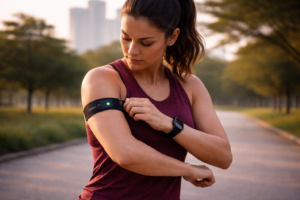
Are Optical Heart Rate Monitors Accurate for Running? (Wrist vs Arm vs Chest)
Are optical heart rate monitors accurate? Most runners assume there’s a simple answer: strap = accurate, optical = not. Reality is a bit more nuanced. Modern optical sensors — especially arm-based ones — have improved a lot.For most training, they are accurate enough to guide your decisions. The real question isn’t perfect accuracyIt’s useful accuracy…
-

Are Running Watches Accurate? What You Should Actually Trust
Running watches give you a lot of data: ✓ pace✓ heart rate✓ distance✓ VO₂ max✓ running power But how accurate is it really? Some runners trust every number. Others ignore them completely.The truth is somewhere in between. In this guide, you’ll learn: → how to use the data the right…
-
Do I Need a Running Watch? (Honest Guide for Everyday Runners)
Running watches are everywhere. GPS, heart rate, training load, VO2 max — it can feel like you need one to run properly. But the truth is simpler. You don’t need a running watch to become a better runner — but it can help, if you use it the right way.…
-

Time-Based Long Runs: Should Long Runs Be Based on Time or Distance?
Many runners wonder whether long runs should be based on time or distance. Both approaches are common in training plans, but many coaches prefer defining long runs by time on feet rather than distance. Training plans often prescribe numbers like 16 km, 24 km, or 30 km, and it’s easy to…
-

How Long Should a Long Run Be? (10K, Half, Marathon Guide)
A long run is typically 20–30% of your weekly running distance, depending on your experience and race goal. Some coaches prefer defining long runs by time instead of distance. This approach focuses on time on feet rather than kilometers, which can make it easier to keep the effort within the intended…