
Guides
This section collects guides, comparisons, and practical insights to help runners train smarter. From understanding key metrics to choosing the right gear and building effective training habits, each article focuses on clear, actionable knowledge for consistent progress.
-

How Long Should a Tempo Run Be? (And Why More Isn’t Always Better)
Once you understand what a tempo run is — and how it should feel — the next question comes naturally: How long should you actually hold that effort? At first, it seems simple. You pick a number, run for that long, and you’re done. But in practice, this is where…
-

How Fast Should a Tempo Run Be? (And Why Pace Alone Doesn’t Work)
If you’ve ever tried to run a tempo session based purely on pace, you’ve probably noticed something: Some days it feels right. Other days, the exact same pace feels completely off. That’s where most runners get stuck. They’re told tempo should be a specific pace — but in reality, tempo…
-

What Is a Tempo Run? (And Why It Feels So Confusing)
What Is a Tempo Run? A tempo run is not about reaching a high effort.It is about holding a controlled one. A tempo run is one of the most talked about workouts in running — and also one of the most misunderstood. Most runners have heard the phrase “comfortably hard,”…
-

How to Increase Weekly Running Volume Safely (Without Breaking Down)
Running more is one of the most reliable ways to improve. But it’s also where many runners get stuck — or injured. You add distance, feel good for a while, and then something starts to feel off. Not a big injury. Just enough to slow you down. The problem isn’t…
-

How to Run More Without Getting Injured (A Smarter Way to Build Volume)
Running more sounds simple at first. You add a few kilometers, maybe an extra running day, and try to stay consistent. But for many runners, this is exactly the phase where training suddenly becomes less stable instead of more productive. Small aches start appearing. Legs feel heavier more often. Recovery…
-

Can You Improve Running Without Speedwork? (What Actually Matters More)
Speedwork often feels like the center of progress. Intervals, tempo runs, structured sessions — they all look purposeful. They are visible, measurable, and easy to associate with improvement. Because of that, it is natural to assume that getting faster comes primarily from running fast. But that is not always how…
-

What Happens If You Run Too Fast Too Often (And Why It Slows You Down)
There’s a point in training where things stop making sense. You’re running regularly.You’re putting in the effort.And yet — your progress stalls, your legs feel heavy, and nothing feels as easy as it should. The problem is rarely that you’re not doing enough. More often, it’s this: you’re running too…
-
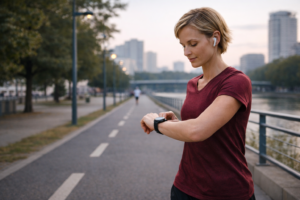
Optical vs Chest Strap Heart Rate: Which Should Runners Use?
A heart rate strap measures your heart rate using electrical signals.Similar to how an ECG works. Instead of estimating blood flow like optical sensors, it detects the actual signal your heart produces. This makes it: → very precise→ very stable→ and extremely fast to respond In comparison, optical sensors (whether…
-
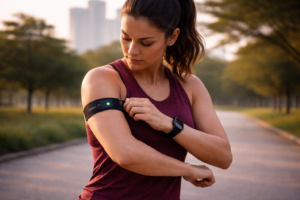
Are Optical Heart Rate Monitors Accurate for Running? (Wrist vs Arm vs Chest)
Most runners assume there’s a simple answer: strap = accurate, optical = not. Reality is a bit more nuanced. Modern optical sensors — especially arm-based ones — have improved a lot.For most training, they are accurate enough to guide your decisions. The real question isn’t perfect accuracyIt’s useful accuracy If the data helps you train…
-

Are Running Watches Accurate? What You Should Actually Trust
Running watches give you a lot of data: ✓ pace✓ heart rate✓ distance✓ VO₂ max✓ running power But how accurate is it really? Some runners trust every number. Others ignore them completely.The truth is somewhere in between. In this guide, you’ll learn: → how to use the data the right…