
Running at an easy pace should feel comfortable. But many runners notice something frustrating: even when running slowly, their heart rate climbs higher than expected.
This is especially common when building aerobic fitness. Factors like pace, fatigue, heat, and training experience can all push heart rate higher than it should be during easy runs.
The good news is that in most cases, a high heart rate isn’t a problem — it’s simply a signal that your body is still adapting. With the right approach, you can gradually lower your running heart rate and make easy runs truly easy.
A high heart rate during easy runs usually does not mean you are unfit.
It often means your body is still adapting to aerobic training. Learning to slow down and control effort is the first step toward improving endurance.
Why Your Heart Rate Stays High When Running
Before trying to lower your heart rate, it helps to understand why it rises in the first place.
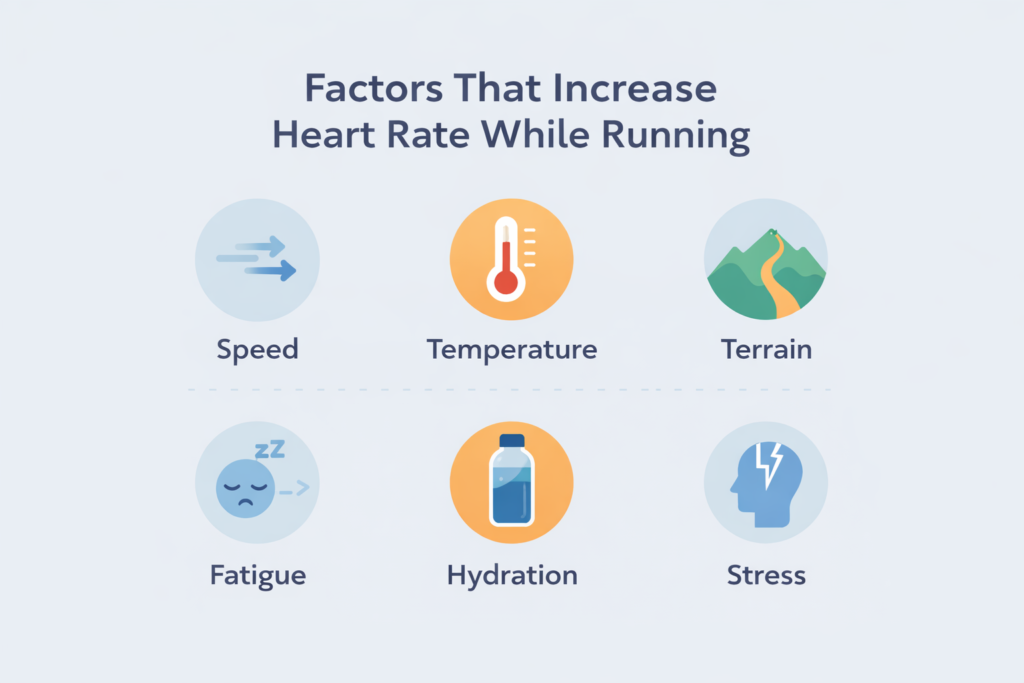
Heart rate reflects how hard your cardiovascular system is working to deliver oxygen to your muscles. When the demand for oxygen increases — because of speed, fatigue, heat, or terrain — your heart beats faster.
For many runners, the most common reason for a high heart rate is simply running too fast for their current aerobic fitness. What feels easy in terms of effort may still be above the body’s optimal aerobic training zone.
If you’re unsure what your ideal training zones are, understanding how heart rate zones work is a good starting point.
The Most Common Cause: Running Too Fast
One of the biggest mistakes runners make during easy runs is allowing pace to dictate effort.
Most runners are used to thinking about training in terms of minutes per kilometer or mile. But pace doesn’t always reflect the true physiological effort your body is producing.
For example:
- running in warm weather
- running on hills
- running while fatigued
- running under stress
All of these can raise your heart rate even if your pace remains the same.
This is why many endurance coaches recommend using heart rate instead of pace to control easy run intensity.
Running slower than you think you should may feel uncomfortable at first, but it’s often the key to building a stronger aerobic base.
Lowering your heart rate is not about forcing it down during a single run.
It is the result of consistent easy running, aerobic adaptation, and smart training structure over time.
6 Practical Ways to Lower Your Heart Rate While Running
1. Slow Down More Than You Think
This is the most common and most effective solution.
Many runners believe they are running “easy”, but their pace still pushes them above their aerobic training zone. When this happens, heart rate climbs even if the effort feels comfortable.
Running truly easy often means slowing down more than expected — sometimes by 30–60 seconds per kilometer compared to your normal pace.
At first this can feel frustrating, but over time your aerobic system adapts, and you’ll be able to run faster at the same heart rate.
2. Use Short Walking Breaks
Walking breaks are not a sign of weakness. In fact, they can be a very effective tool when building aerobic fitness.
If your heart rate climbs above your target zone, a short 30–60 second walk can help bring it back down quickly. Once your heart rate drops, you can resume running.
Over time, these walking breaks usually become less necessary as your cardiovascular system adapts.
3. Focus on Consistency, Not Speed
Lowering your heart rate while running takes time.
The key is consistent aerobic training rather than occasional hard efforts. Easy runs performed regularly allow the body to increase mitochondrial density, improve oxygen delivery, and strengthen the cardiovascular system.
As these adaptations occur, the same running pace gradually requires less effort, and heart rate naturally decreases.
4. Run in Cooler Conditions
Environmental factors can significantly affect heart rate.
Heat forces your body to work harder to regulate temperature, which increases cardiovascular strain. This often results in a noticeably higher heart rate even when running at the same pace.
Running early in the morning or later in the evening can often make it much easier to keep heart rate under control.
5. Pay Attention to Breathing
Breathing rhythm can also influence perceived effort and heart rate.
When runners start to breathe shallowly or irregularly, the body often responds by increasing cardiovascular demand.
Try to maintain relaxed, rhythmic breathing during easy runs. A steady breathing pattern can help keep effort controlled and prevent unnecessary spikes in heart rate.
6. Be Patient — Aerobic Fitness Takes Time
One of the most important things to understand is that lowering your running heart rate does not happen overnight.
For most runners, noticeable improvements appear after several weeks of consistent training. As aerobic fitness improves, heart rate gradually becomes more stable during easy runs.
What once felt difficult at a given heart rate will eventually start to feel comfortable.
Should You Use Heart Rate Instead of Pace?
Many runners naturally focus on pace when training. Minutes per kilometer or mile feel like the most intuitive way to measure effort.
However, pace alone doesn’t always reflect how hard your body is actually working.
Environmental conditions such as heat, hills, fatigue, and hydration can significantly affect your heart rate even if your pace remains the same. On some days, a pace that normally feels easy may suddenly push your heart rate much higher than expected.
This is why many endurance coaches recommend using heart rate as the primary guide for easy runs, especially when building aerobic fitness.
If you want a more practical starting point, you can also use the Heart Rate Zone Calculator for Running to estimate training zones based on your recent race effort rather than relying only on generic formulas.
By monitoring heart rate, runners can better control training intensity and ensure that easy runs remain truly easy.
Choosing the right sensor matters more than most runners think — explained in Are Optical Heart Rate Monitors Accurate?
Some runners also prefer to combine both methods — using heart rate to control effort while still keeping an eye on pace as a secondary reference.
This approach often provides the best balance between physiological accuracy and practical training feedback.
Many runners use chest straps to monitor zones more accurately.
Our guide to the Best heart rate monitors for running compares the most reliable options.
How Long Does It Take to Lower Your Running Heart Rate?
Lowering your running heart rate is a gradual process. Unlike short-term performance improvements, aerobic adaptations take time to develop.
For most runners, noticeable improvements appear after 4–8 weeks of consistent training. As your aerobic system becomes more efficient, your body requires less effort to maintain the same running pace.
Over several months, many runners notice that:
- their heart rate stays lower during easy runs
- their breathing feels more controlled
- they can run faster while staying in the same heart rate zone
This process is often referred to as aerobic development. As the heart becomes stronger and the muscles improve their ability to use oxygen, the cardiovascular system simply doesn’t need to work as hard.
The key is consistency. Easy runs performed regularly create the conditions for these adaptations to occur.
Over time, the pace that once pushed your heart rate into higher zones will start to feel comfortable again.
Many runners are surprised to discover that slowing down and focusing on aerobic training eventually allows them to run faster with less effort.
Modern running watches allow you to track both pace and heart rate during workouts.
If you’re choosing one for training, see our guide to the Best running watches for running.
Frequently Asked Questions
Why is my heart rate so high when I run slowly?
A high heart rate during slow running is very common, especially for newer runners or those building aerobic fitness. Even if the pace feels easy, the cardiovascular system may still be working above the optimal aerobic zone.
Factors such as heat, fatigue, dehydration, and lack of aerobic conditioning can all cause heart rate to rise more than expected. As your aerobic fitness improves, your heart rate will gradually become more stable during easy runs.
Will my running heart rate decrease with training?
Yes. As aerobic fitness improves, the body becomes more efficient at delivering oxygen to the muscles. This means your heart does not need to beat as fast to support the same running pace.
With consistent training, many runners notice that their heart rate gradually decreases during easy runs while their pace stays the same — or even becomes faster.
Is it normal for beginners to have a high heart rate while running?
Yes, it is completely normal. Beginners often have a higher heart rate because their cardiovascular system is still adapting to endurance training.
Over time, regular easy running helps strengthen the heart, improve oxygen delivery, and build aerobic capacity. As these adaptations occur, heart rate typically becomes lower and more stable during runs.
Should I run slower to keep my heart rate low?
In many cases, yes. Running slower allows you to stay within your aerobic training zone, which is essential for building endurance.
Although it may feel unusual at first, slowing down during easy runs helps develop the aerobic system more effectively. As fitness improves, runners are usually able to maintain faster paces at the same heart rate.