
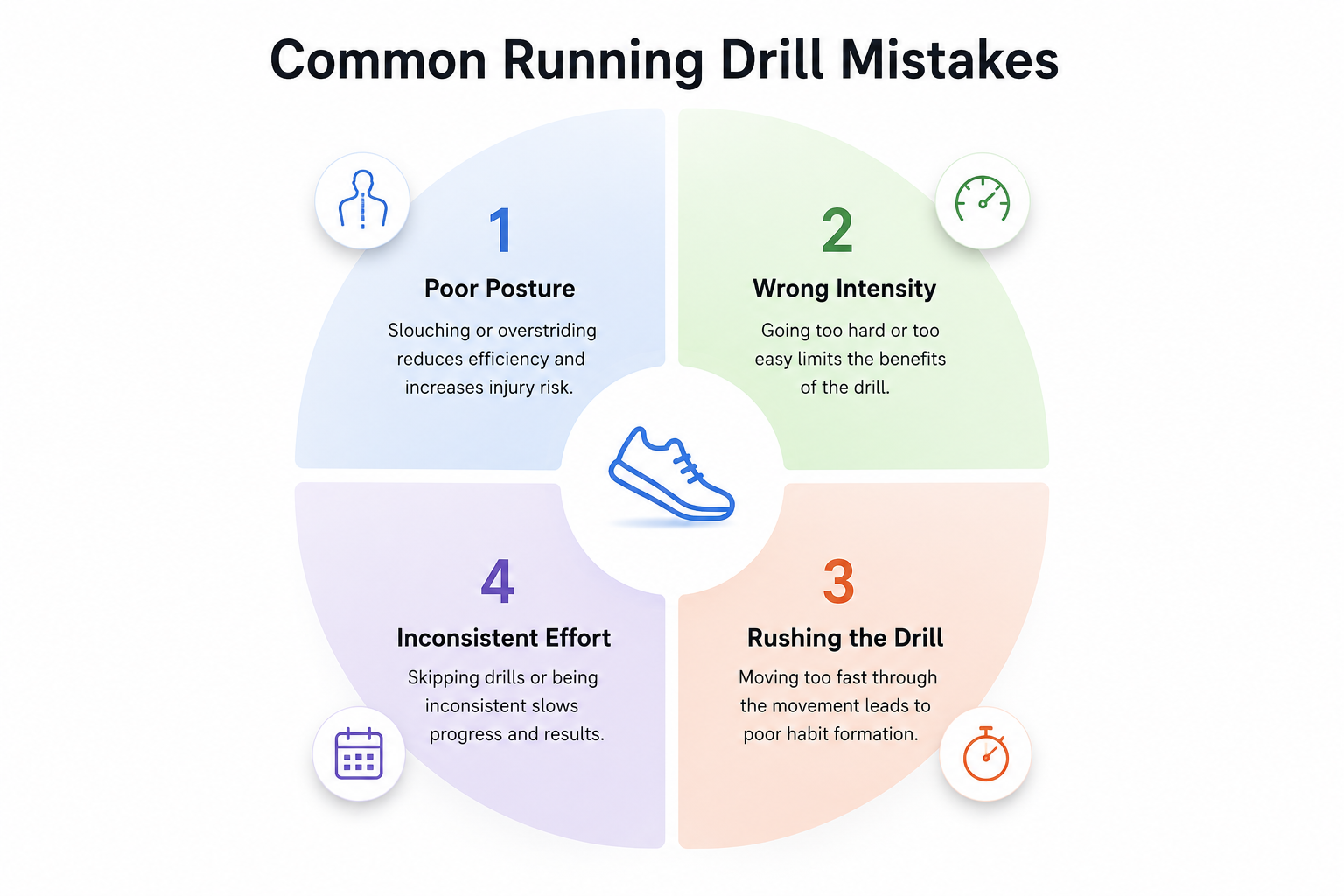
Common Running Drill Mistakes
One thing I’ve started noticing is that most runners don’t perform running drills incorrectly because they lack ability.
They perform them incorrectly because they misunderstand their purpose. Once drills become another workout to complete instead of a way to prepare for running, small mistakes begin to appear.
Some runners rush through every movement. Others spend twenty minutes trying to perform every drill they’ve ever learned. Some become so focused on perfect technique that they forget they’re only warming up.
Ironically, none of these approaches make the drills more effective.
The good news is that the most common mistakes are also the easiest to fix. Running drills aren’t about doing more. They’re about preparing better.
I honestly believe that’s why simple drill routines tend to work best. The goal isn’t to perform the most impressive warm-up. It’s to arrive at the start of your run feeling relaxed, coordinated, and ready to move.
If you’re unsure whether today’s run even requires drills, the Today’s Run Decision Calculator can help you choose the right level of preparation before you begin.
Mistake 1: Treating Running Drills Like a Workout
I’ve started noticing that this is probably the most common mistake recreational runners make. Once drills become part of a training routine, it’s easy to assume they should feel challenging.
People start moving faster. They add more repetitions. Some even finish their drill routine breathing almost as hard as they will during the workout itself.
That’s a sign something has gone wrong. Running drills aren’t meant to build fitness. They’re meant to prepare you to use your fitness.
If the drills leave you tired before the session has even begun, they’re no longer serving their original purpose. I honestly believe a successful drill routine should leave you feeling the opposite.
You should finish wanting to run, not wanting to rest.
The main workout should always be the hardest part of the session.
If you’d like to understand why drills focus on preparation rather than conditioning, Why Running Drills Matter explains the reasoning behind their role in a training plan.
Mistake 2: Trying to Learn Too Many Drills
One thing I’ve started noticing is that runners often confuse variety with progress. They watch videos, discover new exercises every week, and feel as though they should constantly expand their routine.
In reality, most recreational runners don’t need fifteen different drills. They need five or six familiar ones performed consistently.
A simple routine is easier to remember, quicker to complete, and allows you to focus on moving well instead of trying to remember what comes next.
That’s where real improvement usually comes from. Not from collecting more exercises, but from repeating the right ones often enough that they become second nature. I honestly believe this is one of the biggest advantages of keeping drills simple. The less time you spend deciding what to do, the more likely you are to include them before your important workouts.
If you’re unsure where to start, The Best Running Drills for Beginners introduces a small selection of drills that covers everything most runners need.
Mistake 3: Rushing Through Every Drill
I’ve started noticing that many runners perform drills as though they’re trying to finish them as quickly as possible.
Ironically, the faster the drills become, the less useful they often are. Running drills aren’t a race. They’re an opportunity to pay attention to how you move before the workout begins.
If every exercise is rushed, it’s easy to lose the posture, rhythm, and coordination the drills are supposed to reinforce. That’s why controlled movement is usually more valuable than fast movement.
Take high knees as an example. The goal isn’t simply to lift your knees as many times as possible.
It’s to move with balance, good posture, relaxed shoulders, and a smooth rhythm that can later carry over into your running. I honestly believe slowing down slightly often leads to better drills. Quality nearly always beats speed.
If you’re interested in how drills contribute to more efficient movement over time, Can Running Drills Improve Running Economy? explains why relaxed repetition matters more than intensity.
Mistake 4: Expecting Immediate Results
One thing I’ve started noticing is that runners sometimes judge drills after only a handful of sessions. They expect to feel faster straight away or hope their running form will suddenly improve after a week or two. When that doesn’t happen, it’s easy to conclude that drills don’t work.
In reality, that’s asking too much from a few minutes of preparation. Running drills aren’t designed to create dramatic overnight changes. They’re designed to reinforce small movement habits that become more natural over time.
Just like aerobic fitness develops through months of consistent running, coordination also improves through repetition. The changes are often so gradual that you don’t notice them happening.
Instead, one day you simply realise that your stride feels smoother, your movements feel more relaxed, and your warm-up has become almost automatic. I honestly believe that’s the real value of running drills. Not quick results, but quiet improvements that accumulate over months of consistent training.
Conclusion
Most running drill mistakes don’t come from performing the exercises incorrectly. They come from expecting the drills to do something they were never designed to do.
Running drills aren’t meant to replace training, build fitness, or leave you exhausted before the workout even begins. Their role is much simpler. They prepare your body to move well.
Keep your routine short, focus on quality rather than quantity, and allow improvements to develop gradually instead of searching for instant results.
I honestly believe that’s why the best drill routines often look surprisingly ordinary. They’re simple enough to repeat, consistent enough to become a habit, and effective because they support the training that really matters.
If you’re building your own warm-up routine, What Are Running Drills? brings together the fundamentals of why runners use drills, while our guide to the Best Running Shoes for Daily Training compares versatile shoes that work equally well for drills, warm-ups, and everyday miles.
Frequently Asked Questions
What is the biggest mistake runners make with running drills?
The most common mistake is treating running drills like a workout. Drills should prepare you for running, not leave you tired before the main session begins.
Should running drills feel difficult?
No. Running drills should feel controlled and purposeful rather than exhausting. If they leave you out of breath, they’re probably too intense.
Is it better to learn lots of running drills?
Not usually. A small selection of familiar drills performed consistently is more beneficial than constantly adding new exercises.
How fast should I perform running drills?
Focus on smooth, controlled movement rather than speed. Good coordination and posture are more important than completing the drills as quickly as possible.
How long does it take to see results from running drills?
Running drills contribute to long-term improvements in movement and coordination. Most benefits develop gradually through consistent practice rather than appearing after only a few sessions.