
Many runners wonder whether long runs should be based on time or distance.
Both approaches are common in training plans, but many coaches prefer defining long runs by time on feet rather than distance.
Training plans often prescribe numbers like 16 km, 24 km, or 30 km, and it’s easy to assume that distance is the most important factor.
However, many coaches prefer to define long runs by time on feet rather than distance.
Running for a certain duration keeps the workout within the intended aerobic effort — regardless of pace differences between runners.
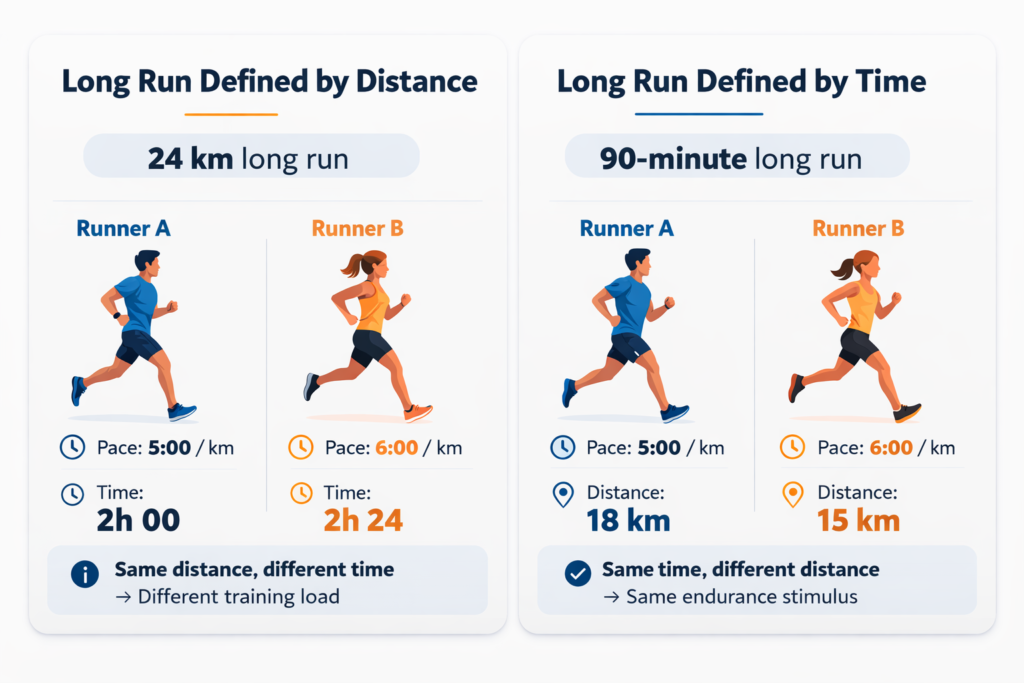
For example, a 90-minute long run can look very different depending on pace, yet still produce the same endurance stimulus.
Long runs can be defined by distance or time, but the goal is always the same:
– build aerobic endurance without turning the run into a race.
For many runners, thinking in time instead of distance makes it easier to keep the effort comfortable and sustainable.
Modern running watches allow you to track pace, distance time and heart rate during workouts.
If you’re choosing one for training, see our guide to the Best Running Watches for Running (2026).
Distance-Based Long Runs
Distance is the traditional way most runners define a long run.
Training plans often specify distances like:
• 16 km
• 24 km
• 30 km
This approach works well because it provides clear progression from week to week.
However, distance alone does not guarantee that the run stays within the intended effort.
For example:
Two runners completing a 24 km long run might spend very different amounts of time on their feet.
One runner might finish in 1 hour 50 minutes, while another might need 2 hours 40 minutes.
That difference can significantly change the training load.
Time-Based Long Runs
Because of these differences, many coaches prefer defining long runs by time instead of distance.
This method focuses on the physiological stimulus rather than the exact number of kilometers.
For example:
Runner A – 5:00/km pace → 18 km in 90 minutes
Runner B – 6:00/km pace → 15 km in 90 minutes
Both runners complete essentially the same endurance stimulus, even though the distances differ.
Time-based long runs also make it easier to maintain the correct easy aerobic intensity.
Many runners also rely on heart rate data to keep long runs truly easy.
If you’re considering using a chest strap or watch to monitor effort, see our guide to the Best Heart Rate Monitors for Running.
Time vs Distance: Which Is Better?
In practice, both approaches can work.
Distance-based long runs are useful because they provide clear structure and progression.
Time-based long runs are useful because they keep the training stimulus consistent across different paces.
For many runners, the best approach is a combination of both.
For example:
• beginner runners often benefit from time-based long runs
• experienced runners may follow distance targets
If you’re unsure how long your long run should actually be, read our guide on
How Long Should a Long Run Be.
If you’re wondering about pacing, our article
How Slow Should Long Runs Be explains how to find the right effort level.
And if you want to build your overall training structure, see
Build a Weekly Running Structure That Actually Works.
Key Takeaways
• Long runs can be defined by distance or time
• Time-based runs help standardize the endurance stimulus
• Distance-based runs provide clear progression
• Both methods can work depending on experience level
Frequently Asked Questions
Should beginners use time or distance for long runs?
Beginners often benefit from time-based long runs because they help maintain the correct easy effort.
Is a 90-minute long run enough for marathon training?
For many runners, long runs between 90 minutes and 2.5 hours provide the main endurance stimulus.
Do elite runners use time or distance?
Most elite runners still track long runs by distance, but the underlying goal remains the same: building aerobic endurance.