Are optical heart rate monitors accurate?
Most runners assume there’s a simple answer:
strap = accurate, optical = not.
Reality is a bit more nuanced.
Modern optical sensors — especially arm-based ones — have improved a lot.
For most training, they are accurate enough to guide your decisions.
The real question isn’t perfect accuracy
It’s useful accuracy
If the data helps you train better, it’s accurate enough.
If you’re not sure how heart rate actually guides your training, read our guide on How to Train with Heart Rate
Wrist-based sensors can sometimes struggle with rapid pace changes or interval sessions.
If you want more reliable data, see our guide to the Best Heart Rate Monitors for Running.
Wrist vs Arm vs Chest (the real difference)
This becomes even more important once you understand how effort translates into pace — explained in Heart Rate vs Pace.
Not all heart rate measurements are equal.
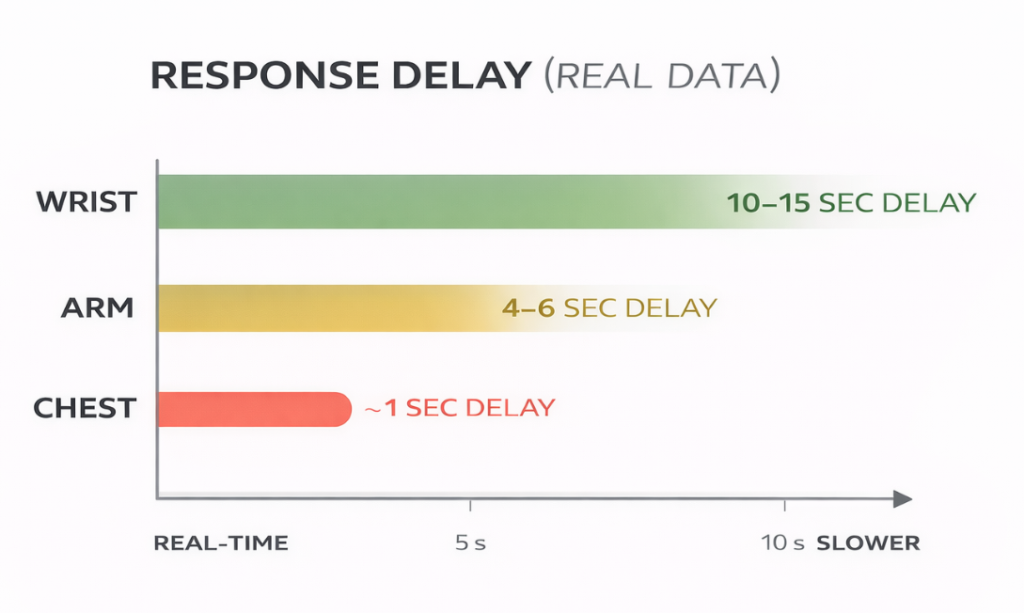
Wrist-based (watch)
- convenient
- but often inconsistent
- struggles with:
- intervals
- cold weather
- movement
Good for daily tracking, not ideal for serious training
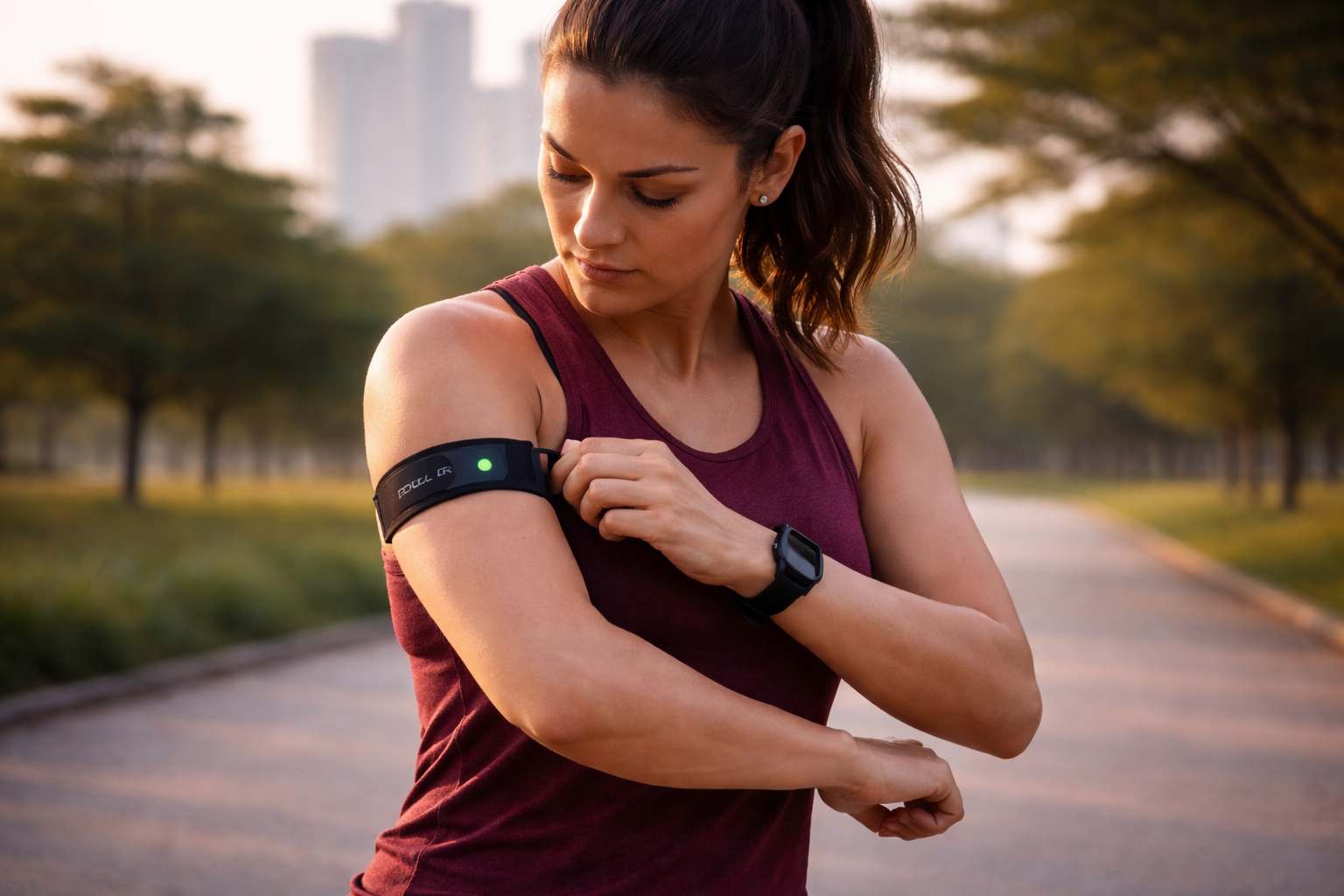
Arm-based optical (like Polar Verity Sense / Coros)
- much more stable signal
- less movement noise
- works well even during intervals
Best balance of comfort + accuracy
Chest strap
- measures electrical signal (EKG-style)
- fastest response
- highest precision
Still the gold standard
Location matters more than technology.
When optical is more than enough
For most runners, optical sensors are not just “okay” — they’re actually ideal.
The goal isn’t perfect data — it’s better efficiency. That’s exactly what we break down in What Is Running Economy.
They work very well for:
- easy runs
- long runs
- steady tempo work
Even for intervals, the difference is usually:
a few seconds delay — not a dealbreaker
If you’re not training for the Olympics, you won’t lose performance because your heart rate reacted 3 seconds slower.
When a chest strap still wins
There are situations where a strap still makes sense:
- very short intervals (e.g. 200–400m)
- lab-level testing
- highly structured HR-based training
or if you just want maximum precision
Chest straps give you precision.
Optical sensors give you consistency.
The real decision (and what actually matters)
Most runners choose based on the wrong thing.
They think:
“What’s more accurate?”
Instead, ask:
“What will I actually use consistently?”
Because:
consistency beats perfect data, the best sensor is the one you wear
The same principle applies to building a training routine — consistency beats perfection. Learn how in Build a Weekly Running Structure.
You don’t become a better runner by measuring perfectly.
You become better by training consistently and recovering well.
Frequently Asked Questions
Do I need a chest strap for running?
Not necessarily.
For most runners, an arm-based optical sensor is more than accurate enough for:
- easy runs
- long runs
- tempo workouts
A chest strap becomes useful if you need maximum precision, especially for short intervals or structured training.
Are wrist heart rate sensors reliable?
They can be — but not always.
Wrist-based sensors are the most sensitive to:
- movement
- temperature
- fit
They work well for general tracking, but are less reliable during harder efforts.
Is optical heart rate good enough for intervals?
In most cases, yes.
There is usually a small delay (a few seconds), but for the majority of runners:
this does not affect training quality in a meaningful way.
What’s the most accurate way to measure heart rate?
A chest strap.
It measures electrical signals directly (EKG-style), making it the fastest and most precise option available.
Key Takeaway
You don’t need perfect data to become a better runner.
- Chest straps give you precision
- Arm-based sensors give you consistency
- Wrist-based sensors give you convenience
The best choice is the one you’ll actually use — every run.
If you’re deciding whether accuracy differences actually matter for your training, read Optical vs Chest Strap Heart Rate: Which Should Runners Use? — it breaks down when precision helps and when it doesn’t.
If you’re serious about training consistency, upgrading how you measure effort is one of the easiest wins.
A structured training plan works best when the basics are covered. Along with proper recovery and pacing, choosing the right running shoes can make a big difference in comfort and injury prevention.
If you’re unsure what to choose, take a look at our guide to the best running shoes for daily training.