
A long run is typically 20–30% of your weekly running distance, depending on your experience and race goal.
Some coaches prefer defining long runs by time instead of distance.
This approach focuses on time on feet rather than kilometers, which can make it easier to keep the effort within the intended aerobic zone.
Learn more in our guide to time-based long runs.
Long runs are one of the most important workouts in endurance training.
They build aerobic capacity, strengthen fatigue resistance, and prepare your body for longer efforts.
But many runners ask the same question:
How long should a long run actually be?
The answer depends on your experience, weekly mileage, and race goals.
A long run should be long enough to build endurance — but not so long that it disrupts the rest of your training week.
Modern running watches allow you to track pace, distance and heart rate during workouts.
If you’re choosing one for training, see our guide to the Best Running Watches for Running (2026).
Why Long Runs Matter
Long runs are the foundation of endurance training.
They teach your body to sustain effort for extended periods and prepare you for longer races.
Over time, long runs help runners:
- build aerobic endurance
- improve fatigue resistance
- practice fueling and hydration
- develop mental durability
Understanding metrics like heart rate, pace, and training load can help runners structure these workouts more effectively.
A structured training works best when the basics are covered. Along with proper pacing, choosing the right running shoes can make a big difference in comfort and injury prevention.
If you’re unsure what to choose, take a look at our guide to the best running shoes for daily training.
Long run distance depends on your race goal and weekly training volume.
As a general guideline, most runners follow ranges like these:
Long runs help develop aerobic endurance and improve fatigue resistance over time.
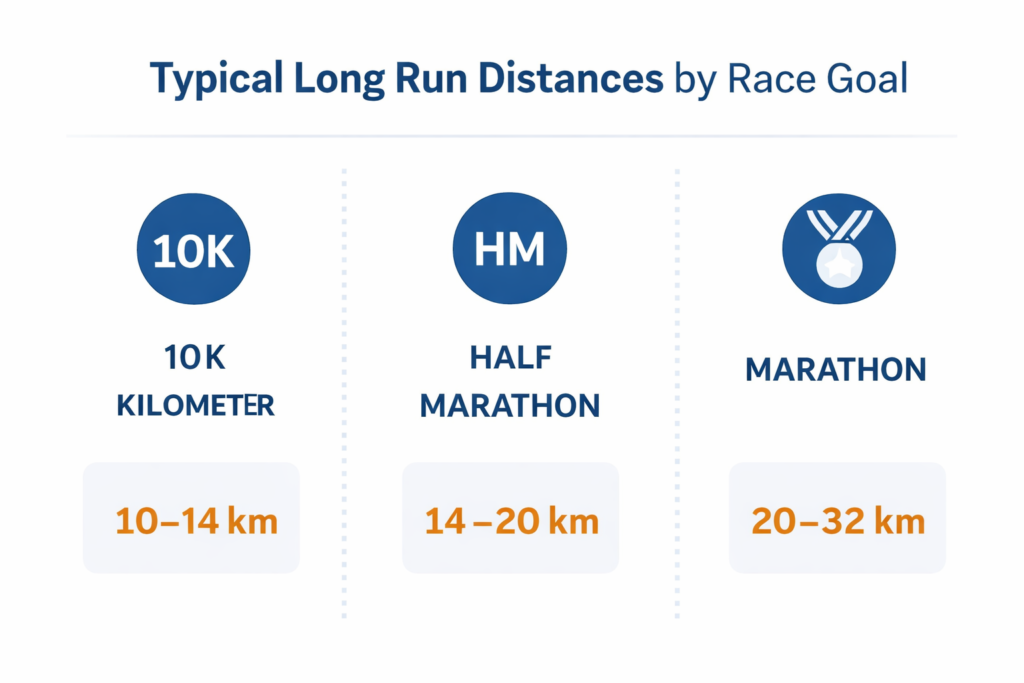
These ranges are not strict rules, but they represent typical long run distances used in structured training plans.
Long runs are typically performed at a comfortable aerobic effort.
If you’re unsure how slow they should feel, see our guide on How Slow Should Long Runs Be.
The 25–30% Rule
Long runs should not dominate your entire training week.
A common guideline used by many coaches is the 25–30% rule.
This means that your long run should represent roughly a quarter to one third of your total weekly mileage.
If you’re unsure how to organize your week, see How to Build a Weekly Running Structure.
Following this rule helps runners build endurance without overloading the body with a single extremely long workout.
Example
Weekly mileage: 40 km → Long run: 10–12 km
Weekly mileage: 60 km → Long run: 15–18 km
Weekly mileage: 80 km → Long run: 20–24 km
This approach keeps your training balanced.
Instead of relying on one huge weekly run, endurance develops gradually through consistent mileage across the entire week.
Consistency in weekly training builds more endurance than occasional heroic long runs.
When Long Runs Become Too Long
Long runs are powerful endurance builders — but they can also become counterproductive when they grow too long relative to your weekly training volume.
When a long run takes up too large a portion of your weekly mileage, recovery becomes harder and the rest of the training week may suffer.
Over time, this imbalance can lead to fatigue, inconsistent training, or even injury.
Signs your long runs may be too long:
- Your long run represents more than 35–40% of your weekly mileage
- Recovery takes several days
- Easy runs feel unusually difficult after long runs
- Quality workouts later in the week suffer
Long runs should challenge your endurance — not derail the rest of your training week.
Long runs work best when they are part of a balanced weekly structure.
When the long run dominates your training week, the quality of the remaining workouts often suffers.
Time-Based vs Distance-Based Long Runs
Distance is the most common way runners define a long run.
Training plans often prescribe distances like 16 km, 24 km or 30 km.
However, many coaches prefer to think about long runs in terms of time on feet rather than distance.
Running for a certain duration allows the workout to stay within the intended aerobic effort, regardless of pace differences between runners.
For example, a 90-minute long run can look very different depending on pace — but it still produces the same general endurance stimulus.
Runner A – 5:00/km pace → 18 km in 90 minutes
Runner B – 6:00/km pace → 15 km in 90 minutes
Both runners complete essentially the same endurance stimulus, even though the distance covered is different.
The goal of a long run is not to reach a specific distance — it is to spend enough time building aerobic endurance.
Long runs are usually performed at a relaxed aerobic intensity.
If you’re unsure how slow they should feel, read How Slow Should Long Runs Be.
Practical Long Run Guidelines
Long runs do not need to be complicated.
Most successful endurance training follows a few simple principles that keep long runs effective without making them overwhelming.
Over time, these small guidelines help runners build endurance safely and consistently.
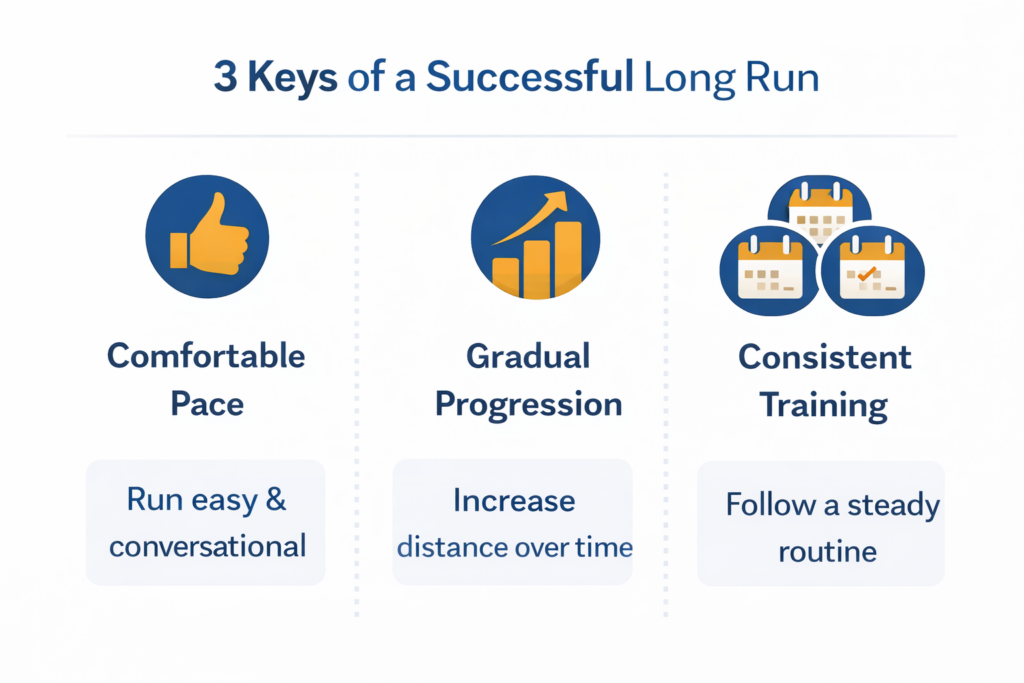
Simple guidelines that make long runs effective:
• Increase long run distance gradually from week to week
• Keep the effort comfortable and conversational
• Avoid turning every long run into a race effort
• Allow enough recovery before your next quality workout
• Practice fueling if your long run exceeds 90 minutes
Long runs are not about proving toughness — they are about patiently building endurance.
Key Takeaways
Long runs are one of the most powerful tools in endurance training — but only when they are used correctly.
The goal is not simply to run the longest distance possible, but to build endurance gradually within a balanced training structure.
Key things to remember:
• Long runs typically represent 20–30% of weekly mileage
• Distance depends on your race goal and experience level
• Most long runs should feel comfortable and sustainable
• Consistency over many weeks matters more than a single extremely long run
The best long runs are the ones that leave you tired — but ready to train again tomorrow.
Long runs are only one piece of structured training.
To see how they fit into a balanced week, read Build a Weekly Running Structure.
If you’re unsure about pacing, our guide How Slow Should Long Runs Be explains how to find the right intensity.
Frequently Asked Questions
How long should a long run be for marathon training?
Most marathon training plans gradually build long runs up to around 28–32 km, depending on experience and weekly mileage.
Is a 10 km long run enough?
For beginner runners, yes. Long runs should scale with overall training volume and experience.
Should long runs be based on distance or time?
Both approaches work. Many coaches prefer time-based long runs, especially for beginners.
Should every long run get longer?
Not necessarily. Most training plans include step-back weeks where long run distance decreases to allow recovery.