
Many runners struggle with the idea of running slow.
When you start tracking your pace or heart rate, easy runs can feel almost too easy — sometimes even frustratingly slow.
But what many runners don’t realize is that easy runs are not wasted miles. In fact, they are one of the most important parts of a well-structured training plan.
Running easy builds the aerobic system that supports everything else: speed, endurance, and recovery between harder workouts.
This is why most experienced runners spend the majority of their training time running at a comfortable, controlled effort — even if it feels slower than expected.
Most runners struggle with easy runs because they run them too fast.
Easy runs should feel controlled and relaxed — usually in Zone 2.
Running slower here allows your body to build endurance without excessive fatigue.
Modern running watches allow you to track both pace and heart rate during workouts.
If you’re choosing one for training, see our guide to the best running watches for running.
Why Easy Runs Are Often Misunderstood
One of the most common mistakes runners make is assuming that every run should feel like a workout.
If a run feels comfortable, many runners start to wonder whether it is even effective. The instinct is often to speed up, push harder, and turn the run into a moderate effort.
But endurance training does not work that way.
The purpose of an easy run is not to push your limits. It is to create the conditions where your aerobic system can develop without accumulating excessive fatigue.
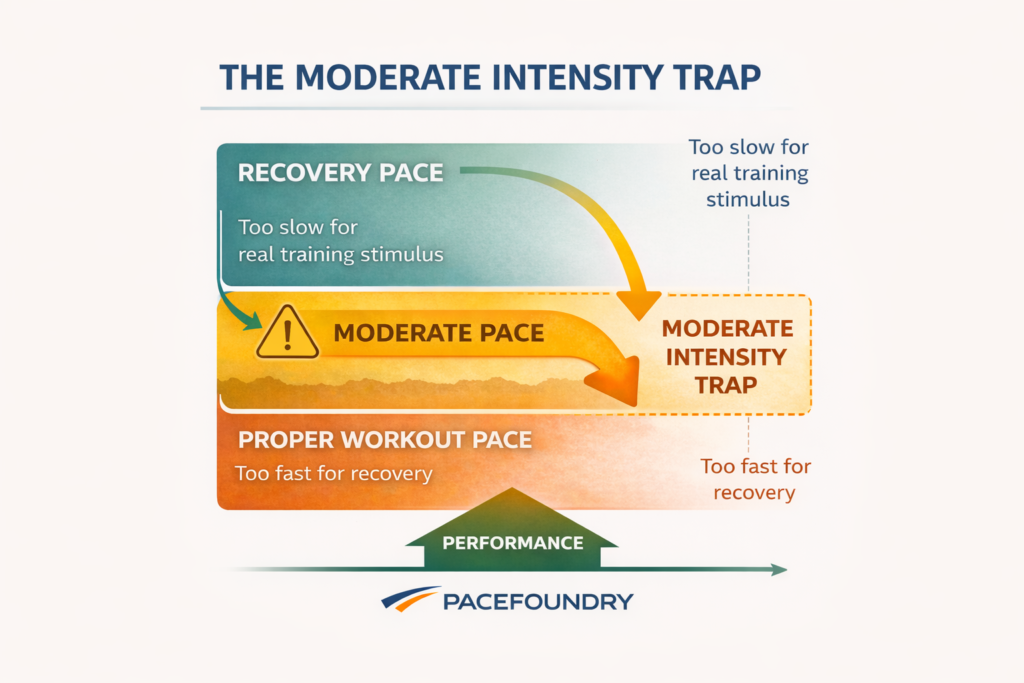
When runners constantly push their pace, they often end up in what coaches sometimes call the “moderate intensity trap.” These runs feel harder than an easy run but are not structured enough to produce the benefits of a true workout.
Over time, this leads to slower progress, poorer recovery, and an increased risk of burnout or injury.
Easy running solves this problem by allowing your body to build endurance while staying fresh enough for the workouts that actually drive performance improvements.
What an Easy Run Actually Means
An easy run is not defined by pace. It is defined by effort.
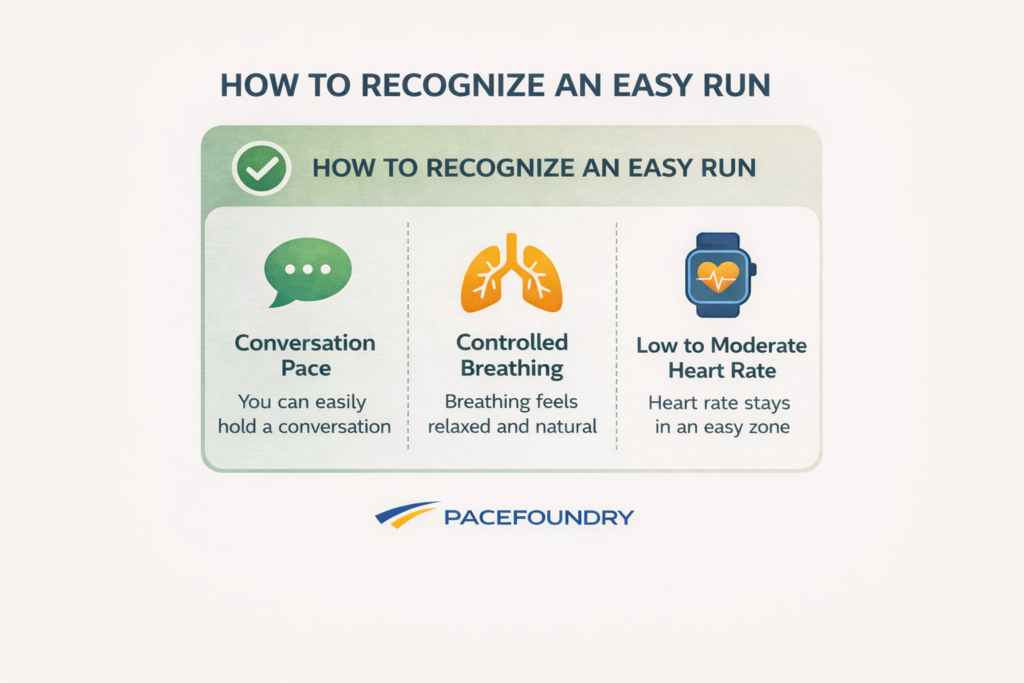
For most runners, an easy run should feel comfortable and controlled. You should be able to maintain a conversation without struggling for breath, and the effort should feel sustainable for a long period of time.
Easy runs are usually done in comfortable daily trainers designed for long, steady mileage.
Our guide to the best running shoes for daily training compares the most popular options.
Many runners are surprised to discover that their true easy pace is slower than expected. This often happens when runners start paying attention to heart rate or perceived effort instead of focusing only on speed.
In practical terms, easy runs usually fall within aerobic intensity, where the body relies primarily on oxygen to produce energy. This is the intensity where the majority of endurance adaptations occur.
Over time, as your aerobic fitness improves, you will notice that the same easy effort gradually becomes faster — even though the effort level stays the same.
If you’re unsure what “easy” should actually look like in terms of heart rate, read What Is a Good Heart Rate for Running — it explains how to match effort with the right intensity.
Easy running is not wasted training.
It is the foundation that allows harder training to work.
Understanding what an easy run is matters — but knowing how it should actually feel during your run is just as important. In What Does an Easy Run Actually Feel Like, we break down the key signals to look for.
Why Running Slow Builds Aerobic Fitness
Easy running works because it targets the aerobic energy system, which is responsible for producing energy efficiently over long periods of time.
At lower intensities, your body relies primarily on oxygen to fuel muscle activity. This allows the cardiovascular system to adapt without creating excessive fatigue.
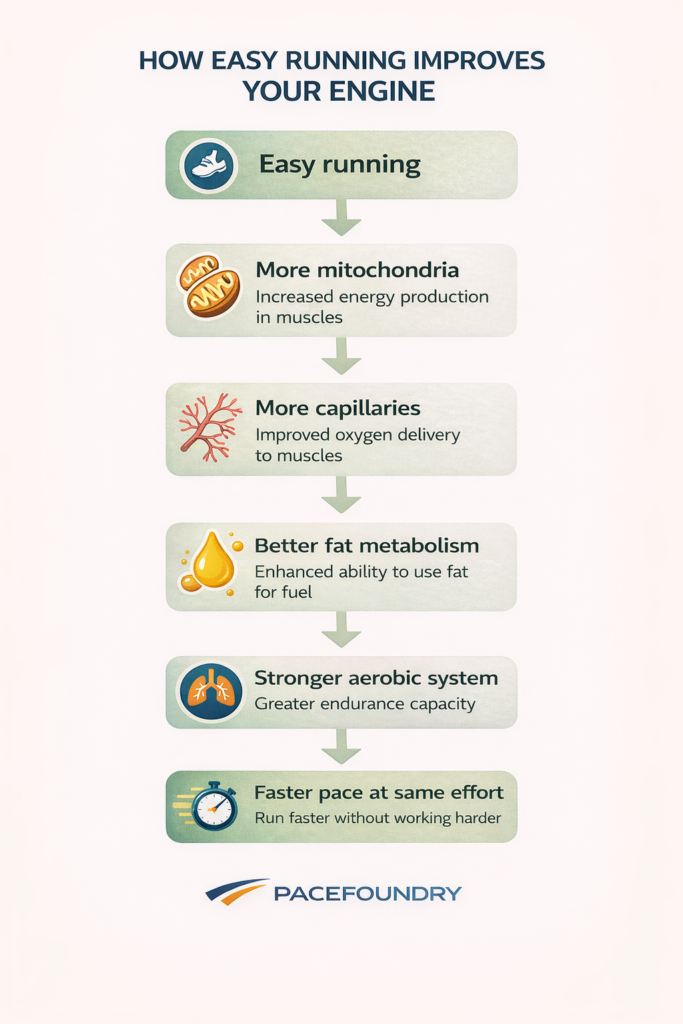
Over time, consistent easy running leads to several important physiological improvements.
Your body increases the number of mitochondria, the structures inside muscle cells that produce energy. More mitochondria means your muscles can generate energy more efficiently.
Easy running also stimulates the growth of capillaries, the tiny blood vessels that deliver oxygen to working muscles. This improves oxygen delivery and waste removal during exercise.
At the same time, your body becomes better at using fat as a fuel source, which helps preserve glycogen for harder efforts later in a run or during races.
Together, these adaptations make your aerobic system stronger. As a result, the same effort gradually allows you to run faster while keeping your heart rate under control.
The Most Common Easy Run Mistakes
Even when runners understand the concept of easy running, many still struggle to apply it correctly.
The problem is rarely motivation. Most runners simply fall into habits that make easy runs harder than they should be.
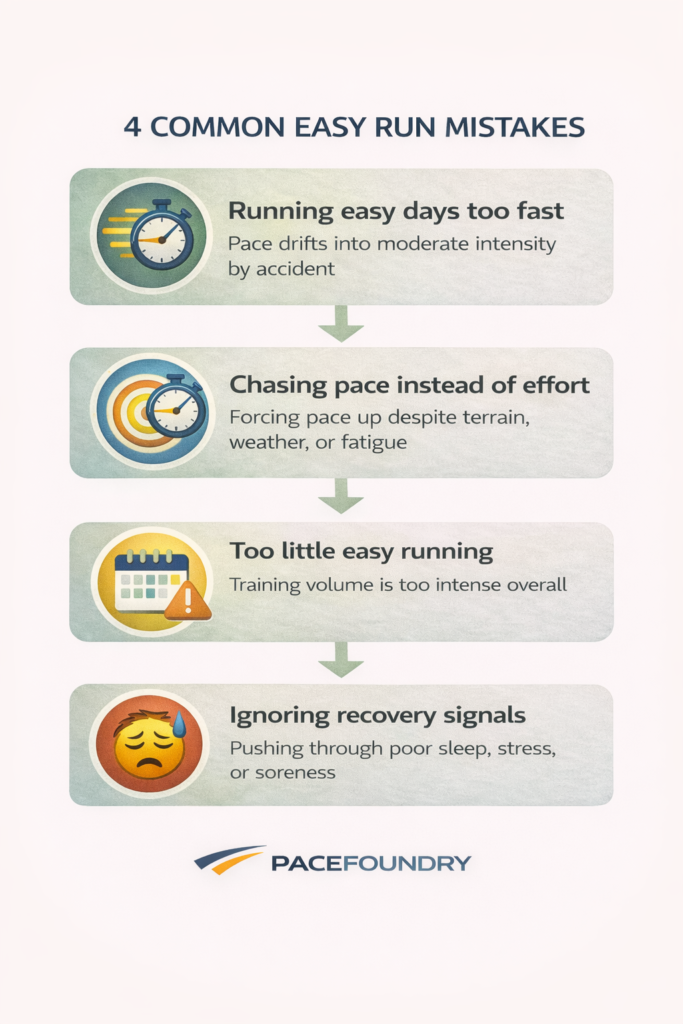
Here are some of the most common mistakes.
Running easy days too fast
This is by far the most frequent mistake.
When a run feels comfortable, many runners gradually speed up without noticing. The pace slowly drifts into moderate intensity — the exact zone that provides less training benefit while still creating fatigue.
Over time this turns easy runs into something closer to steady workouts.
Chasing pace instead of effort
Many runners start an easy run with a pace target in mind, even though it’s not always the most reliable metric.
But pace changes with terrain, weather, fatigue, and recovery status. Trying to force a specific pace can push effort higher than intended.
Instead, effort should guide the run. Heart rate, breathing, and perceived effort are much better indicators of intensity.
Running easy runs too rarely
Another common mistake is simply not doing enough easy running.
Endurance training works best when most of the weekly volume happens at low intensity. This allows runners to accumulate more total mileage without excessive fatigue.
Many training systems follow a simple rule: roughly 70–80% of weekly running should feel easy.
Ignoring recovery signals
Some days your body needs slower running than usual.
Poor sleep, stress, heat, or previous hard workouts can all elevate heart rate. On those days the correct decision is not to push through — it is to slow down.
Easy runs should adapt to how the body feels on that particular day.
How Easy Should an Easy Run Feel?
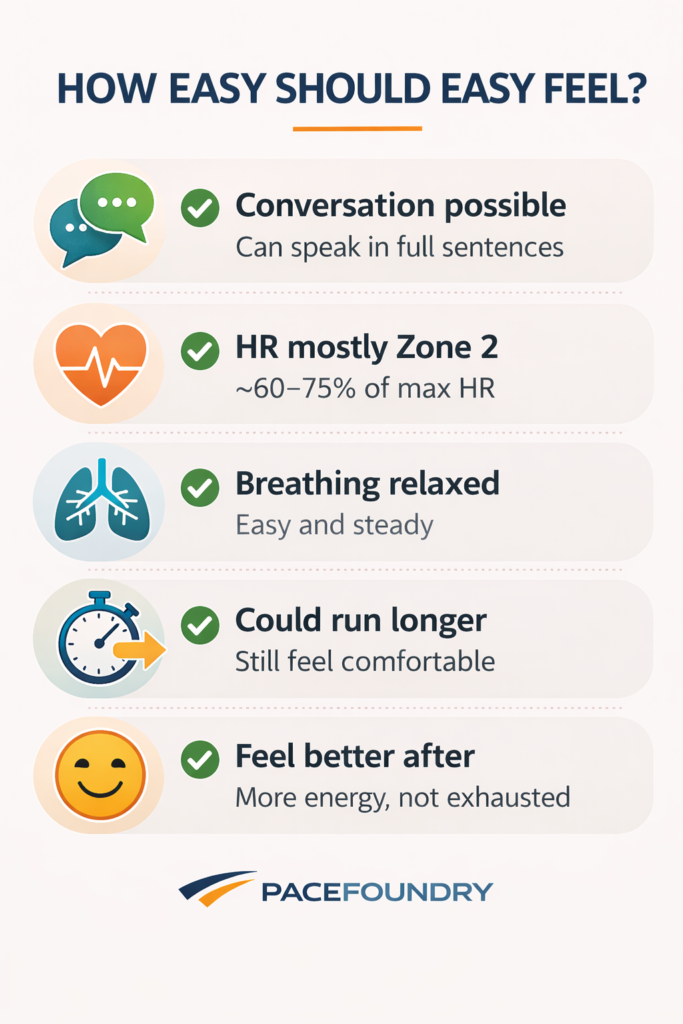
An easy run should feel controlled, relaxed, and sustainable for a long period of time.
You should be able to maintain a conversation without struggling for breath. Many runners use the “talk test” as a simple guideline — if speaking in full sentences becomes difficult, the pace is likely too fast.
Heart rate can also provide useful guidance. For most runners, easy runs typically fall within Zone 2 (learn more in our guide to heart rate training zones), which corresponds to roughly 60–75% of maximum heart rate or slightly below lactate threshold.
However, the exact numbers vary from runner to runner.
What matters more than the specific heart rate value is the overall perceived effort. Easy running should feel comfortable enough that you could continue well beyond the planned distance if needed.
When done correctly, an easy run should leave you feeling better at the end of the run than at the beginning.
This is a simple but powerful signal that the intensity was appropriate.
Frequently Asked Questions
Is it normal for easy runs to feel very slow?
Yes. Easy runs often feel slower than expected, especially when runners start using heart rate or effort instead of pace. Over time, as aerobic fitness improves, the same easy effort will naturally become faster.
Should easy runs always stay in Zone 2?
Zone 2 is a useful guideline, but it should not be treated as a rigid rule. Easy runs should feel relaxed and sustainable, with breathing under control and effort clearly below tempo intensity.
Can beginners benefit from easy running?
Absolutely. In fact, beginners often benefit the most from easy running because it allows them to build aerobic fitness safely while avoiding excessive fatigue or injury.
If you want to build a smarter training structure that balances easy and hard sessions, start with our guide: