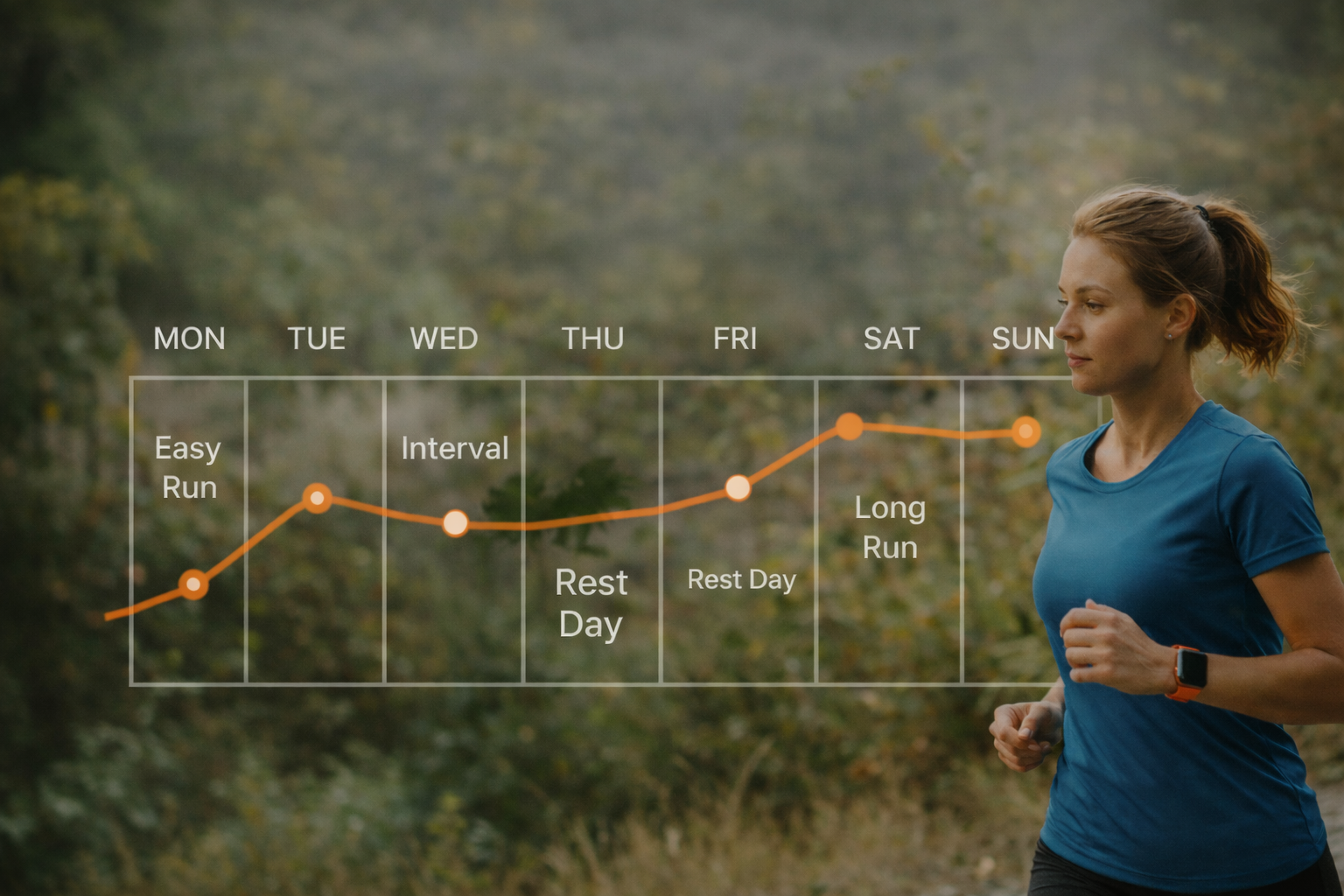
Balance easy runs, workouts, and recovery — without overtraining or guessing.
Most runners don’t lack effort.
They lack structure.
Random workouts create random results.
A structured week creates consistent progress.
When your training week has a clear rhythm — easy runs, one focused workout, a long run, and recovery — improvement becomes predictable.
This is the simple framework that works.
A structured training plan works best when the basics are covered. Along with proper recovery and pacing, choosing the right running shoes can make a big difference in comfort and injury prevention.
If you’re unsure what to choose, take a look at our guide to the best running shoes for daily training.
Why Structure Matters
Without structure, training slowly drifts.
Easy days become too hard.
Hard days lose purpose.
Fatigue builds quietly.
Most runners don’t overtrain because they run too much.
They overtrain because their weeks lack balance.
A structured week does three things:
- Protects easy days
- Makes hard sessions meaningful
- Builds fatigue gradually, not randomly

Structure creates rhythm.
Rhythm creates adaptation.
And adaptation is what makes you faster.
The Weekly Foundation
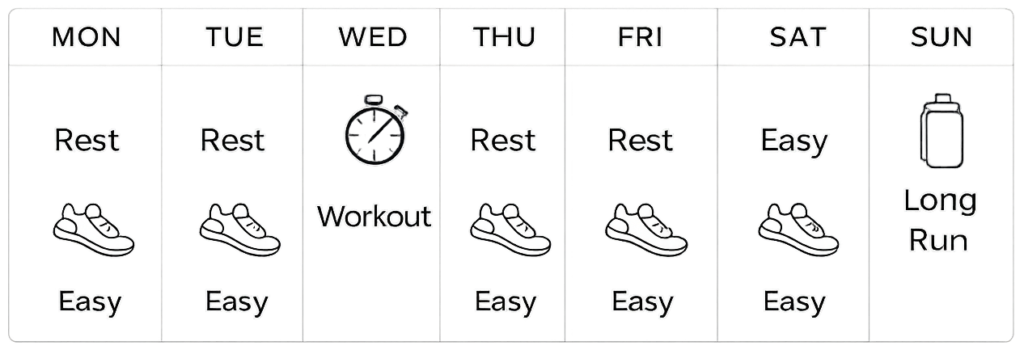
At its simplest, a balanced week includes four elements:
- Easy aerobic running
- One focused quality session
- One long run
- At least one true recovery day
That’s enough to drive steady progress for most recreational runners.
No complexity required.
How to Build Your Week
Start simple.
Don’t design the perfect week.
Design a repeatable one.
Step 1 — Anchor Your Long Run
Choose one day for your long run.
Keep it consistent.
This becomes the backbone of your week.
Step 2 — Place One Quality Session
Add one focused workout:
- Tempo
- Intervals
- Threshold work
Place it 2–3 days away from your long run.
Give it purpose. Don’t stack intensity.
Step 3 — Protect Easy Days
Everything else supports adaptation.
Easy runs should feel controlled.
You should be able to speak in full sentences.
If your easy days feel hard, your structure is broken.
Step 4 — Schedule Real Recovery
At least one day per week should be:
- Full rest
or - Very light recovery
Progress happens when you recover — not when you train.

A Simple 4-Day Example
This is enough for most recreational runners.
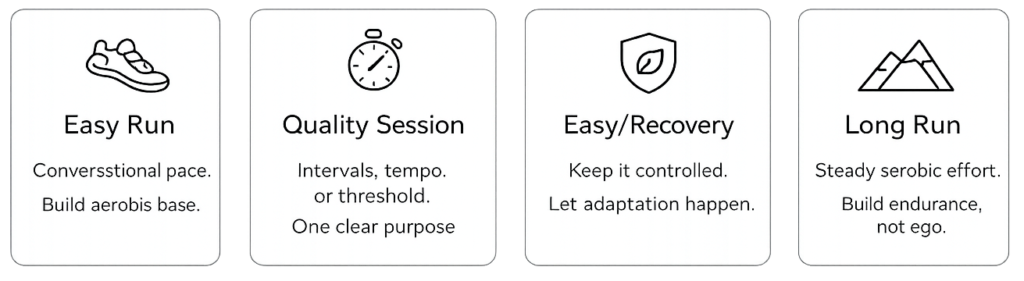
Day 1 – Easy Run
Conversational pace.
Build aerobic base.
Day 2 – Quality Session
Intervals, tempo, or threshold.
One clear purpose.
Day 3 – Easy Run or Recovery
Keep it controlled.
Keep it controlled.
Day 4 – Long Run
Steady aerobic effort.
Build endurance, not ego.
That’s it.
You don’t need seven complex sessions.
You need four consistent ones.
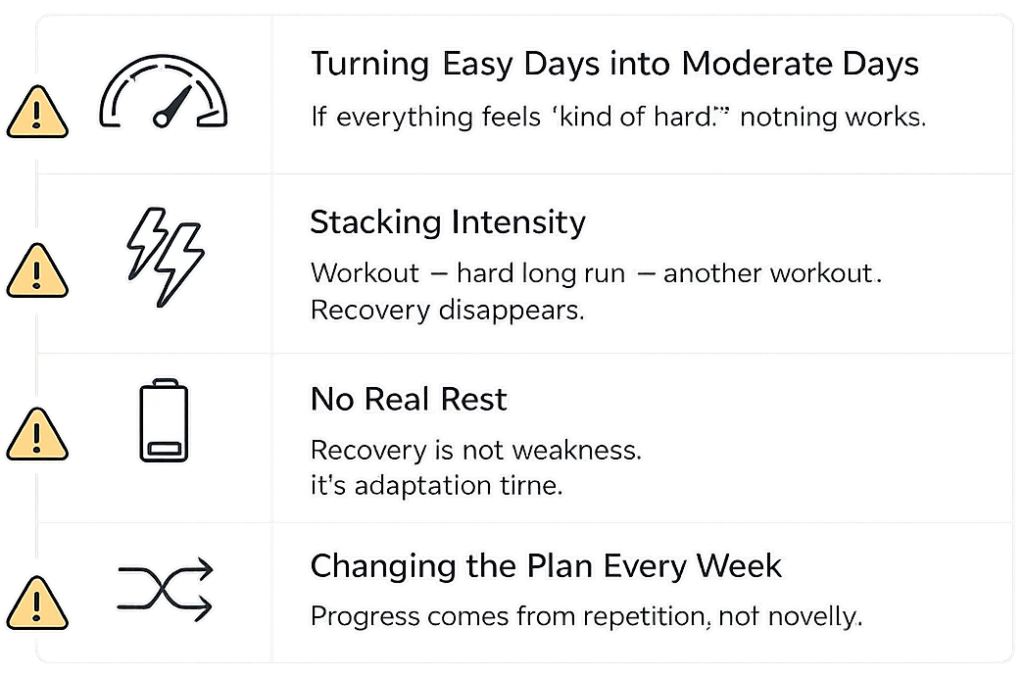
Common Mistakes When Building a Week
Most runners don’t fail because they train too little.
They fail because they train without balance.
Build the Week. Repeat It. Improve.
You don’t need a complex program.
You need:
- Clear roles for each session
- Balance between stress and recovery
- Consistency week after week
Structure removes guesswork.
Consistency creates progress.
Build a week you can repeat.
Then repeat it long enough to improve.
If you’re tracking your training with heart rate, read Optical vs Chest Strap Heart Rate: Which Should Runners Use? — it helps you choose a setup you’ll actually use consistently.