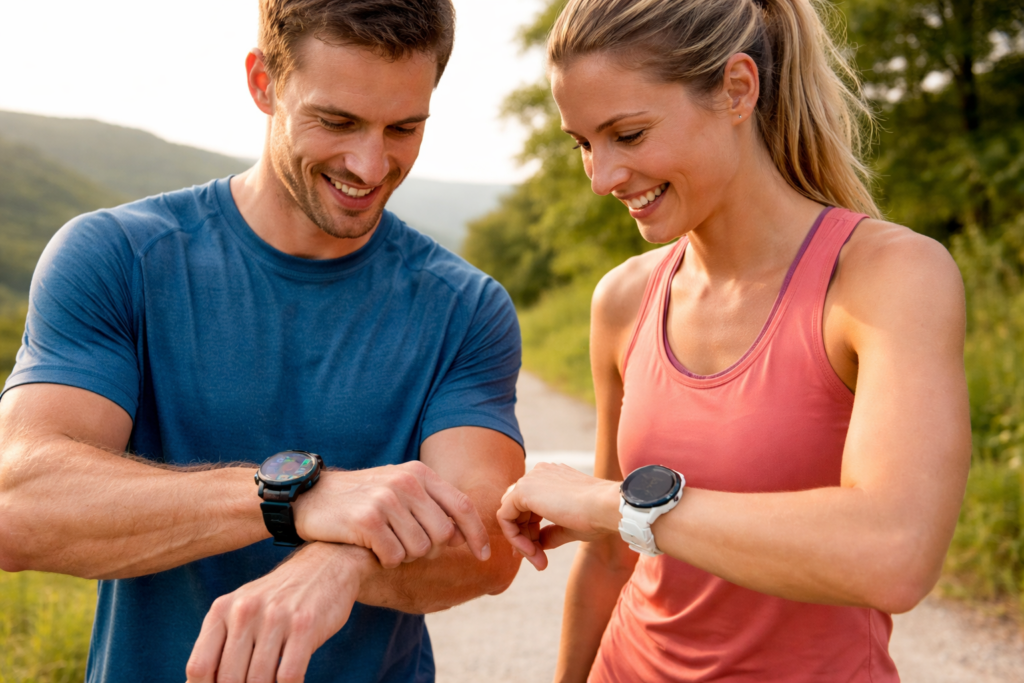
PaceFoundry focuses on running tools that help everyday runners train smarter — not just gadgets with marketing hype.
The best running watches help you track pace, heart rate, training load, and recovery. In this guide we compare the most reliable GPS watches for runners — from beginner-friendly models to advanced training tools.
The goal of good running gear is not to impress — it’s to quietly support thousands of kilometers of consistent training.
Top picks
Quick comparison table
| Watch | Best for | Battery (smartwatch) | Weight | GPS | Price |
|---|---|---|---|---|---|
| ★ Garmin Forerunner 970 | Best overall | ~23 days | ~53 g | Dual-band GNSS | Check price |
| COROS Pace 4 | Best value | ~20 days | ~32 g | Dual-frequency GPS | Check price |
| Garmin Forerunner 965 | Advanced runners | ~23 days | ~53 g | Multi-band GNSS | Check price |
| Polar Vantage V3 | Training insights | ~8 days | ~57 g | Dual-frequency GPS | Check price |
| Suunto Race 2 | Outdoor runners | ~26 days | ~60 g | Dual-band GNSS | Check price |
# 1 Best overall –Garmin Forerunner 970
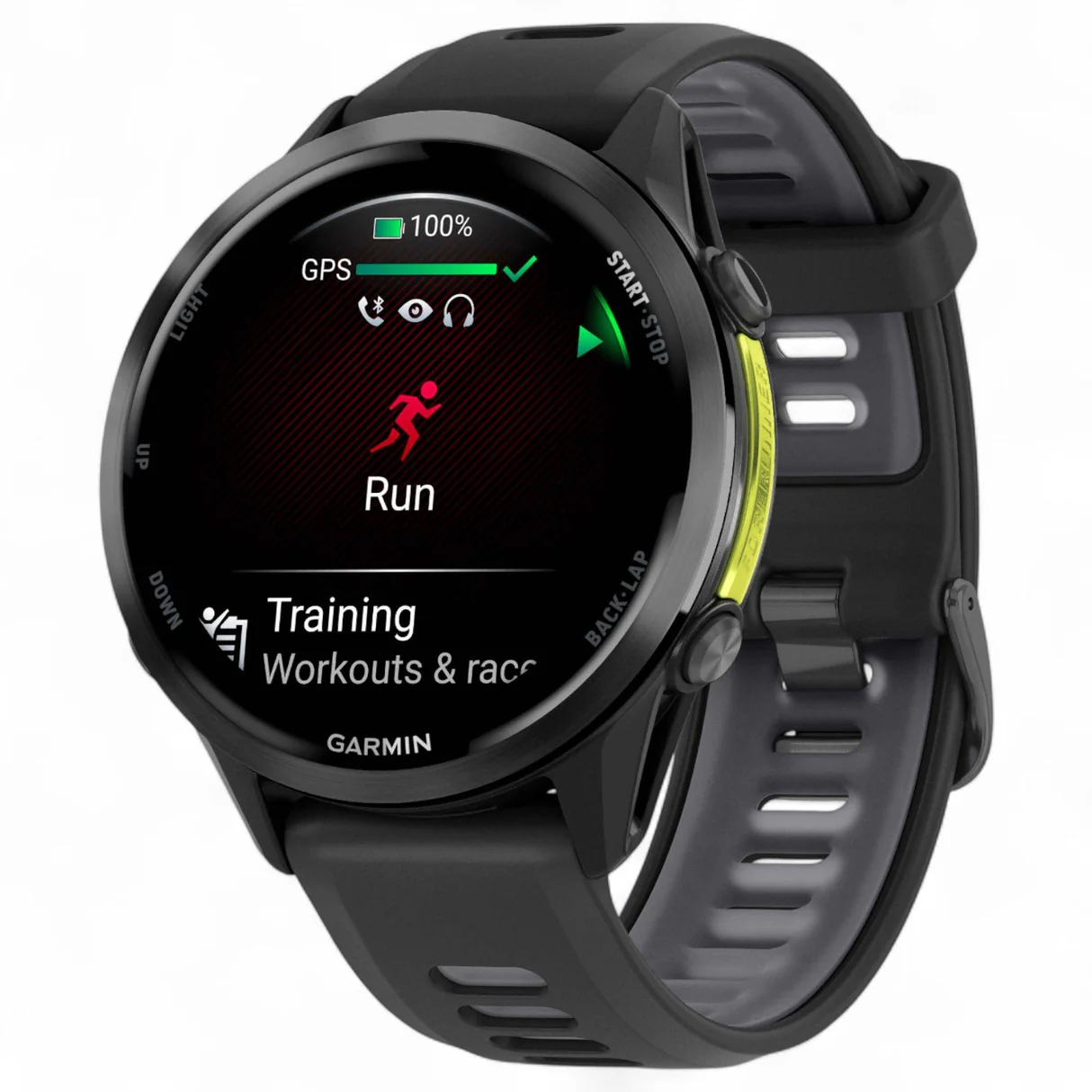
If you want one running watch that does almost everything well, the Garmin Forerunner 970 is the easiest pick in this guide. It combines a bright 1.4-inch AMOLED display, built-in maps, multi-band GPS, advanced training features, and smartwatch extras like a speaker and mic in one premium package. Garmin also positions it as a running and triathlon watch, so it works both as a dedicated running pick now and as a strong multisport option later.
The reason the Forerunner 970 stands out is balance. It is not just good at one thing. It gives runners high-end training tools, full-color mapping, multi-band GPS with SatIQ, and up to 15 days of battery life in smartwatch mode or up to 26 hours in GPS mode, which is a very strong all-round mix for a premium running watch.
KEY SPECS
- 1.4-inch AMOLED display
- Up to 15 days battery in smartwatch mode
- Up to 26 hours in GPS mode
- Built-in maps and enhanced navigation
- Multi-band GPS with SatIQ
- Speaker and microphone
- Built-in LED flashlight
- 5 ATM water rating
WHY WE LIKE IT
- Excellent feature balance for serious runners
- Strong navigation tools with built-in maps
- Long enough battery for everyday training and long runs
- Premium extras like flashlight, speaker, and mic make it feel more complete than many pure running watches
Keep in mind
Many runners will not need every advanced feature, especially if they mainly want basic pace, heart rate, and GPS tracking. This is my editorial judgment, not a Garmin claim.
It is a premium model, so price is one of the main tradeoffs. This is an inference based on Garmin positioning it as a premium/flagship running and triathlon watch.
Price checked on Amazon • Updated regularly
# 2 Best value – COROS Pace 4
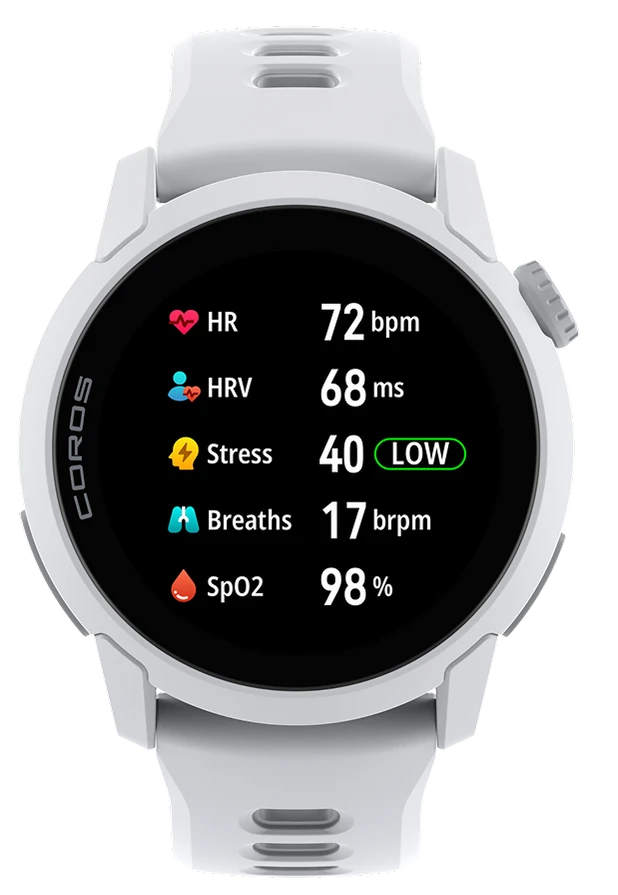
If you want a lightweight running watch with excellent battery life and strong GPS accuracy without paying flagship prices, the COROS Pace 4 is one of the easiest recommendations in this guide. It focuses on the features runners actually use — accurate GPS tracking, structured training tools, and long battery life — while keeping the watch simple and light.
Compared with premium models, the Pace 4 skips extras like full mapping or advanced smartwatch features. But for many runners that is exactly the point. You get reliable tracking, long battery life, and a very comfortable watch that disappears on the wrist during daily training.
KEY SPECS
- Lightweight design (~32 g)
- Up to ~20 days battery life (smartwatch mode)
- Dual-frequency GPS
- Excellent GPS accuracy for running
- Structured workout support
- Strong battery life for daily training
WHY WE LIKE IT
- One of the best price-to-performance ratios among running watches
- Very lightweight and comfortable for long runs
- Excellent GPS accuracy for training and racing
- Simple interface that focuses on running
Keep in mind
The Pace 4 focuses on running essentials rather than smartwatch features. It does not include full offline maps or some of the premium training metrics found in more expensive models. For many runners this is not a problem, but it is worth keeping in mind if you want the most advanced analytics.
Price checked on Amazon • Updated regularly
# 3 Best for advanced runners – Garmin Forerunner 965
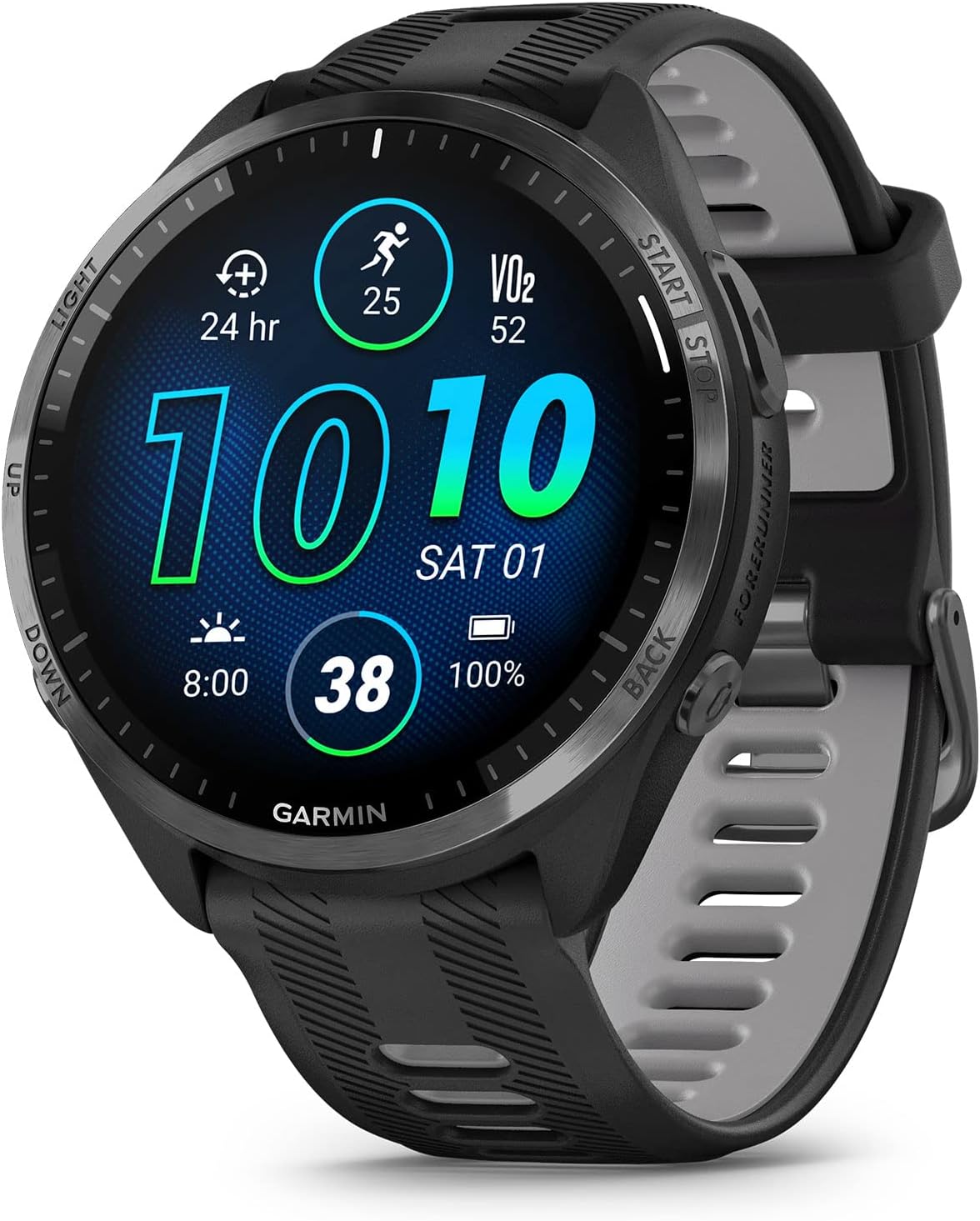
The Garmin Forerunner 965 is one of the best watches for runners who want deeper training data and navigation tools without moving to the larger and heavier multisport watches. It combines advanced training metrics, full-color maps, and multi-band GPS in a relatively lightweight design built specifically for running.
For runners preparing for marathons, structured training blocks, or long-distance events, the Forerunner 965 offers a powerful set of analytics. Garmin’s ecosystem also makes it easy to analyze training load, recovery, and performance trends over time.
KEY SPECS
- Bright AMOLED display
- Multi-band GNSS with SatIQ
- Built-in maps and navigation
- Up to ~23 days battery (smartwatch mode)
- Advanced training metrics and recovery tools
- Lightweight titanium bezel
WHY WE LIKE IT
- Excellent training analytics for serious runners
- Built-in maps help with long runs and exploration
- Multi-band GPS improves accuracy in difficult conditions
- Lighter than many high-end multisport watches
Keep in mind
While the Forerunner 965 is packed with advanced training features, some runners may not need the full set of analytics or mapping tools. If you mainly want simple GPS tracking and heart rate data, more affordable models may offer better value.
Price checked on Amazon • Updated regularly
# 4 Best for training insights – Polar Vantage V3
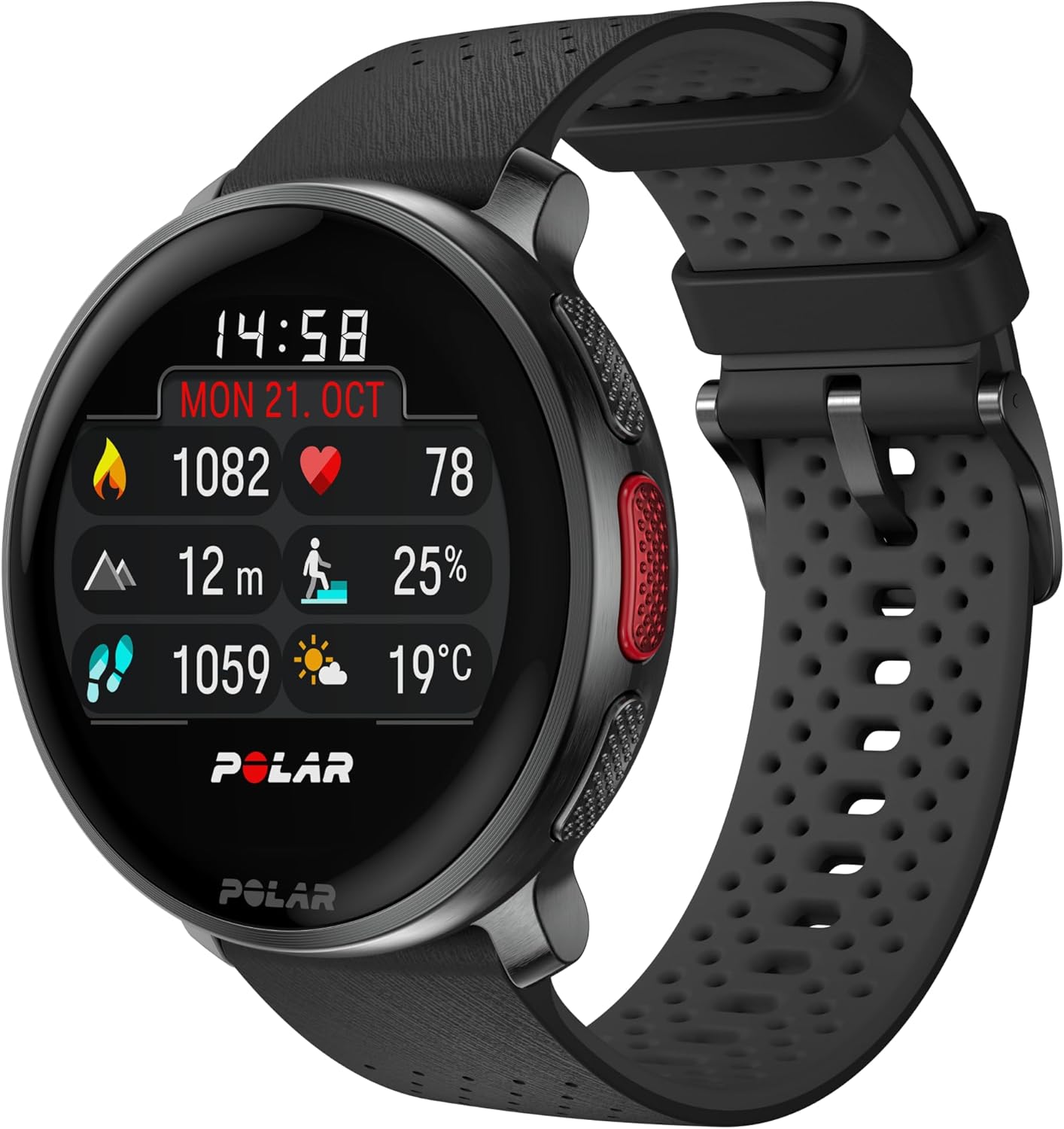
The Polar Vantage V3 is built for runners who care deeply about training data and recovery insights. Polar has long been known for its strong physiological metrics, and the Vantage V3 continues that tradition with advanced tools that help athletes understand how their body responds to training.
While some watches focus heavily on smartwatch features, Polar stays closer to its sports science roots. The Vantage V3 integrates detailed sleep tracking, recovery analysis, and training load monitoring through the Polar Flow ecosystem, making it especially appealing to runners who like structured training.
KEY SPECS
- Bright AMOLED display
- Dual-frequency GPS
- Advanced heart rate tracking
- Detailed recovery and sleep analysis
- Polar Flow training ecosystem
- Lightweight performance-focused design
WHY WE LIKE IT
- Excellent recovery and training insights
- Strong sleep and readiness tracking
- Accurate heart rate monitoring during workouts
- Polar Flow provides clear training analysis
Keep in mind
The Polar Vantage V3 focuses more on training insights than on smartwatch features. Runners who want built-in maps, music storage, or a large app ecosystem may prefer Garmin or other brands. However, athletes who prioritize recovery tracking and physiological data will appreciate Polar’s approach.
Price checked on Amazon • Updated regularly
# 5 Best for outdoor runners – Suunto Race 2
The Suunto Race 2 is a great option for runners who spend a lot of time outdoors and want strong navigation tools alongside reliable training tracking. Suunto has built a reputation for durable sports watches with excellent battery life, and the Race 2 continues that tradition with a modern AMOLED display and advanced GPS features.
For runners who enjoy exploring new routes, trail running, or long outdoor sessions, the Suunto ecosystem offers excellent mapping and navigation capabilities. Combined with long battery life and a robust design, the Race 2 works especially well for athletes who train both on roads and on trails.
KEY SPECS
- Bright AMOLED display
- Dual-band GNSS for improved accuracy
- Long battery life for endurance training
- Built-in offline maps and navigation
- Durable design for outdoor use
- Access to the Suunto app ecosystem
WHY WE LIKE IT
- Excellent battery life for long runs and outdoor sessions
- Built-in maps make exploring routes easier
- Strong GPS accuracy in difficult terrain
- Durable build designed for endurance sports
Keep in mind
While the Suunto Race 2 offers strong navigation and outdoor features, its training ecosystem is not as extensive as Garmin’s and its physiological insights are not as deep as Polar’s. However, for runners who value navigation, battery life, and reliability, it remains a very strong choice.
Price checked on Amazon • Updated regularly
How to choose a running watch
Choosing a running watch can be confusing because most models offer dozens of features. In reality, most runners only need a few key things: reliable GPS tracking, good battery life, and training insights that help guide their workouts. Understanding which features actually matter can make it much easier to pick the right watch.
GPS accuracy
For runners, GPS accuracy is one of the most important features in a watch. A reliable GPS signal ensures your pace, distance, and route data are accurate. Many modern running watches now use dual-frequency or multi-band GPS, which improves tracking in difficult environments such as cities with tall buildings or forest trails.
Battery life
Many modern running watches provide insights beyond basic pace and distance. Metrics such as training load, recovery time, and heart rate trends can help runners manage fatigue and avoid overtraining. Different brands approach these features in different ways — for example, Garmin focuses on training readiness, while Polar is known for recovery and physiological insights.
Weight and comfort
Because runners often wear their watch during every training session, comfort matters. Lightweight watches can feel much better during long runs and races. Many running-focused models weigh between 30 and 60 grams, which keeps them comfortable even during extended workouts.
Ecosystem and app
The software platform behind a running watch is just as important as the hardware. Most watches sync with a mobile app where runners can analyze workouts, plan training, and track long-term progress. Garmin Connect, Polar Flow, and the Suunto app each offer different styles of analysis and training tools.
Frequently asked questions about running watches
Are running watches worth it?
Dual-band or multi-frequency GPS improves accuracy in difficult environments such as cities with tall buildings or forest trails. For most recreational runners, standard GPS is already accurate enough, but dual-band GPS can provide more reliable tracking in challenging conditions.
How long should a running watch battery last?
Most modern running watches last between one and two weeks in smartwatch mode. In GPS mode, battery life typically ranges from 20 to 40 hours depending on the model. Runners who train frequently or run longer distances may benefit from watches with longer battery life.
Is Garmin better than COROS or Polar for running?
Garmin offers one of the largest ecosystems of training tools and smartwatch features. COROS is known for its excellent battery life and simple training-focused design, while Polar stands out with strong recovery insights and physiological metrics. The best option often depends on the runner’s training style and feature preferences.
What is the best running watch for beginners?
For beginners, the best running watch is usually one that focuses on the essentials: accurate GPS, good battery life, and a comfortable design. Many entry-level or mid-range running watches provide all the key features needed for training without the complexity of advanced analytics.
Final thoughts
Choosing the best running watch ultimately depends on how you train and what features matter most to you. Some runners prioritize advanced training insights, while others value simplicity, battery life, or navigation tools. The watches in this guide represent some of the best options currently available for runners at different levels